How To Get Rid Of Xanthomas On Eyelids
How to remove xanthomas on eyelids safely, at home or in a clinic.
Key Takeaways
Xanthomas on the eyelids are xanthelasma: soft, yellow, fat-filled patches, often matching on both eyes. If you’re wondering how to remove xanthomas on eyelids, there are two routes: improve their look at home with a cosmetic gel such as Xanthel®, or have them removed in a clinic. A cholesterol check first is worthwhile.
- A xanthoma on the eyelid is called xanthelasma. It’s the same thing.
- About half of people with it have normal cholesterol, but a blood test is still worth having.
- The patches rarely go away on their own and can slowly grow, so small ones are often the easiest to deal with.
- At home: Xanthel® xanthelasma removal cream is a cosmetic gel made up for your skin, usually applied once.
- In a clinic: laser, freezing, chemical peels or surgery, done by a doctor.
- Avoid garlic, acids and other DIY remedies on eyelid skin.
- New patches can form after any method, so looking after your cholesterol helps.
- Firm, fast-growing or bleeding patches, or any in a child, need a doctor first.
How To Remove Xanthomas On Eyelids: What You’re Dealing With
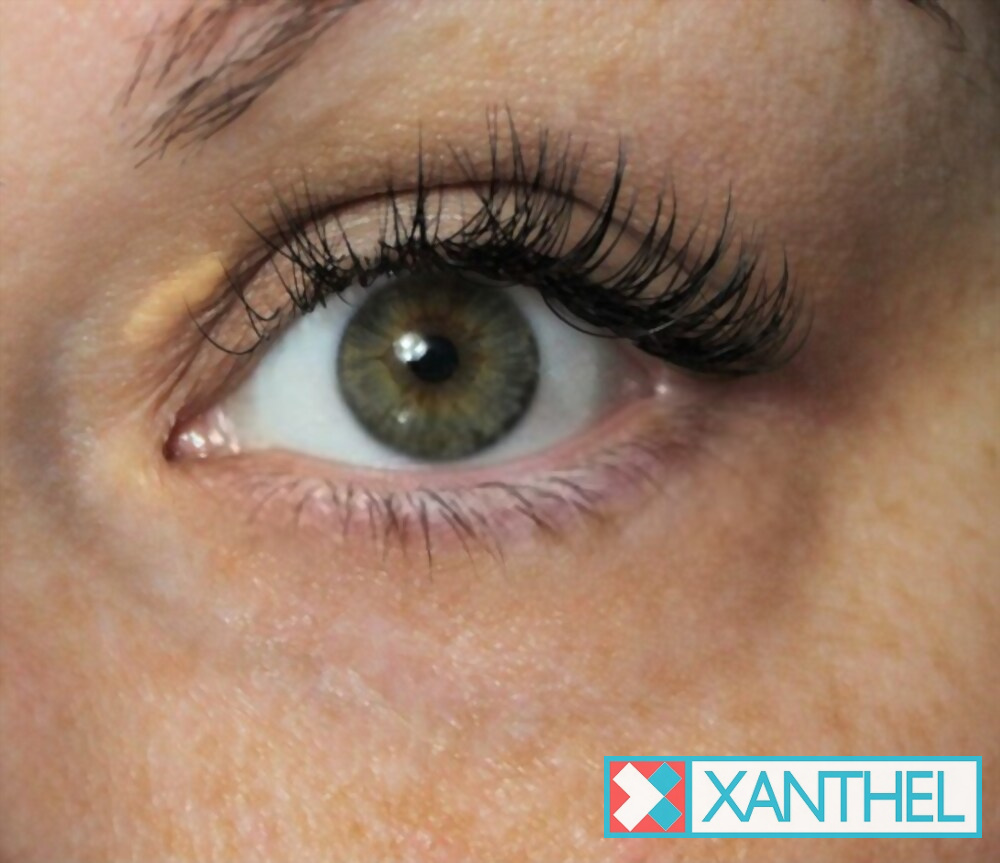
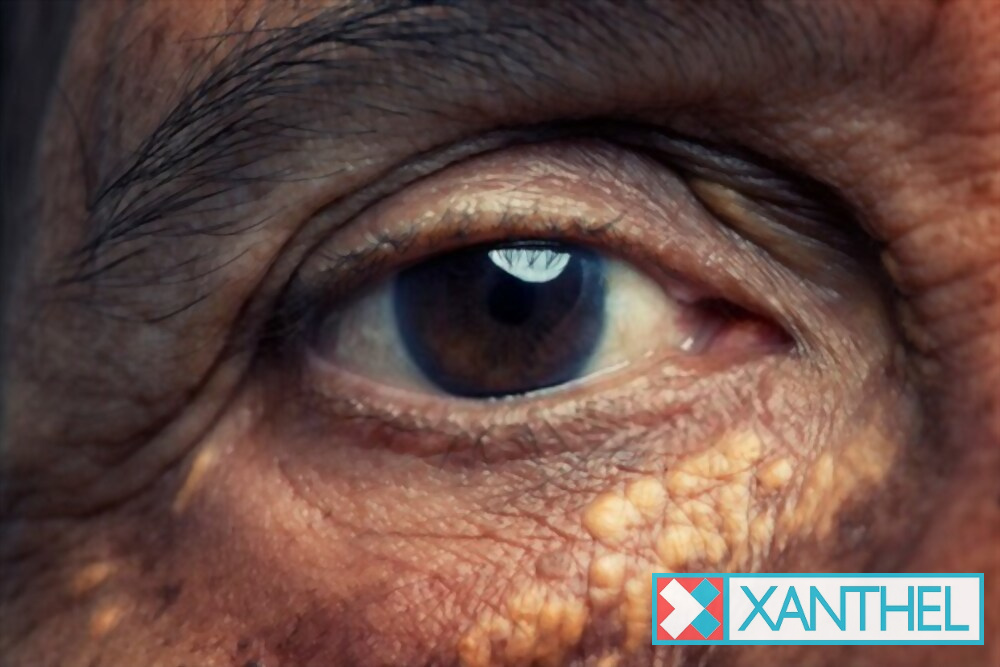
If you’ve been told you have xanthomas on your eyelids, or you’ve spotted soft yellow patches and looked them up, here’s the good news: on the eyelids, a xanthoma has its own name, xanthelasma, and it’s harmless. It’s a build-up of cholesterol-rich fat in the thin skin of the lid, usually starting near the inner corner and often appearing on both sides.
The patches don’t itch, hurt or affect your sight, but they rarely fade on their own, and many people find they slowly grow or spread over the years. That’s why most people decide to deal with them rather than wait. You can improve their look at home or have them removed in a clinic, and this guide walks through both, along with what to check first. If yours are only small, our guide to mild xanthelasma explains why now is a good time to act.

What Is A Xanthoma Of The Eyelid?
A xanthoma is a cluster of fat-filled immune cells, called foam cells, sitting in the skin. They form when fats from the blood seep into the tissue and are swallowed by cells that can’t break them down. The fat inside those cells is what gives the patches their yellow colour. On the eyelids they’re usually flat or slightly raised, which is why doctors sometimes describe xanthelasma as a kind of plane xanthoma. Our guide to xanthoma explains the types found elsewhere on the body.

Are Xanthomas On The Eyelids Harmful?
Not in themselves. They’re not cancer, they don’t spread into the eye, and they very rarely affect your vision. Larger patches can make the eyelid feel a little heavier, but for most people the problem is how they look, and how self-conscious they make you feel.
They do tend to grow slowly, and separate patches can join up over time. Smaller patches are usually simpler to deal with, whichever method you choose. Any removal method treats the patches you have, not the reason they formed, so new ones can appear later, after clinic treatment as much as at-home options. That’s why it pays to be wary of anyone promising they’ll never come back, and why looking after your cholesterol is a sensible step.

Is It An Eyelid Xanthoma?
| Condition | Who gets it | What it looks like | Good to know |
|---|---|---|---|
| Xanthelasma | Adults, usually over 40 | Soft, flat yellow patches near the inner corners, often on both eyes | By far the most likely. Painless and slow-growing, and can be dealt with at home or in a clinic |
| Juvenile xanthogranuloma | Babies and young children | A single orange-yellow, dome-shaped bump, anywhere on the body | Often goes away by itself, but always see a doctor |
| Necrobiotic xanthogranuloma | Middle-aged and older adults (rare) | Firm yellow-orange plaques that spread and can break down | Needs a specialist, as it can be linked to blood conditions |
If a patch is firm, growing quickly, bleeding or on a child, see your doctor before trying any treatment.
What Causes Xanthomas On The Eyelids?
Eyelid xanthomas form when cholesterol-rich fat collects in the skin. They’re often linked to raised cholesterol or triglycerides, but not always: according to NIH StatPearls, about half of people with xanthelasma have normal cholesterol. Diabetes, an underactive thyroid and liver problems can play a part too, and they’re more common from middle age and in women. They can also run in families.
Even with normal cholesterol, they’re worth mentioning to your doctor. A Danish study of nearly 13,000 people, published in the BMJ, linked xanthelasma with a higher risk of heart disease. A simple blood test for cholesterol, blood sugar and thyroid puts your mind at rest. See xanthelasma causes for more.

How Do You Get Rid Of Xanthomas On Your Eyelids?
You have two routes: at home or in a clinic. Xanthel® is a cosmetic gel designed to improve the look of xanthelasma at home. It’s made up for your skin and usually applied once. Clinic treatments are done by a doctor, and costs, recovery and the risk of marks vary. Whichever you choose, skip DIY acids, garlic and picking, because eyelid skin is too delicate.
Ways To Remove Xanthomas On Eyelids
| Option | Where | Good to know |
|---|---|---|
| Xanthel® | At home | A cosmetic gel made up for your skin, usually one application, with a 30-day satisfaction guarantee |
| Laser | Clinic | Can need more than one session, and can leave lighter or darker skin |
| Freezing | Clinic | Quick, but can leave lighter patches of skin |
| TCA peel | Clinic | An acid applied by a doctor. Never try it yourself near your eyes |
| Surgery | Clinic | The patch is cut out, with stitches and healing time, and can leave a scar line |
| Home remedies | At home | Garlic and castor oil have no good evidence, and garlic can burn eyelid skin |
Compare costs, recovery and results in our xanthelasma removal guide.
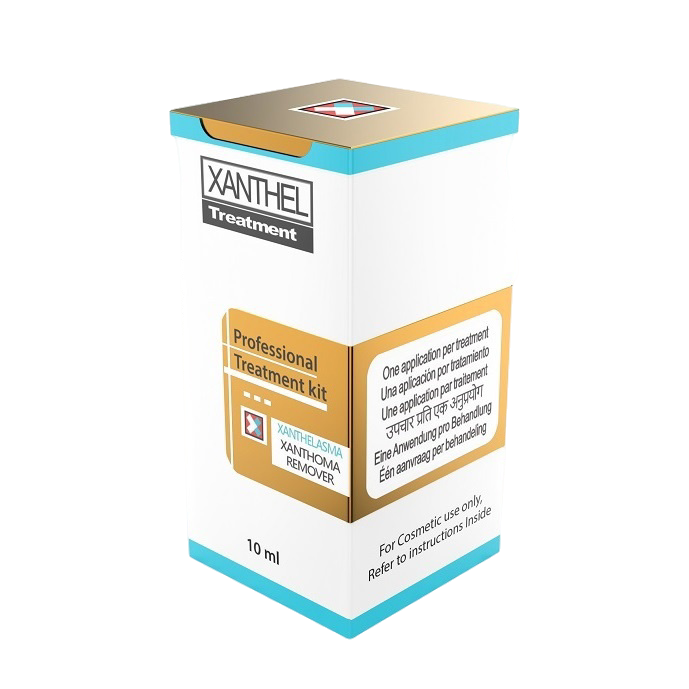
Xanthelasma Cream: For Xanthomas On Your Eyelids
Wondering how to remove xanthomas on eyelids without a clinic? Xanthel® xanthelasma removal cream is a cosmetic gel designed to improve the look of xanthelasma without needles or lasers, so you can stop worrying about those patches every time you look in the mirror. Results vary from person to person.
Made For Your Skin
Each kit is formulated to order for your skin type and tone, rather than one formula for everyone, so it’s designed to work on your patches while staying gentle on the skin around your eyes.
Simple, Private And Quick
Apply it at home in a couple of minutes, usually just once. No clinic, no needles, and free tracked delivery worldwide.
Questions About Removing Eyelid Xanthomas
Can Xanthomas On Eyelids Go Away On Their Own?
Very rarely. They usually stay the same or grow slowly, even if your cholesterol comes down.
Will They Come Back After Removal?
They can, whichever method you use, because removal doesn’t change why they formed. Keeping your cholesterol in check helps.
Can I Use Xanthel® On Both Eyelids?
Yes. Patches on both eyes are common, and your kit is made up for where yours are. See our before and after photos.
Which Treatment Is Right For Me?
It depends on the size and depth of your patches, and whether you’d rather avoid a clinic. Our xanthelasma treatment guide compares every option side by side.
Should I See A Doctor First?
Yes, for a cholesterol check, and straight away if a patch is firm, growing fast, bleeding or on a child.