Cholesterol Deposits On Skin: What They Are
Key Takeaways
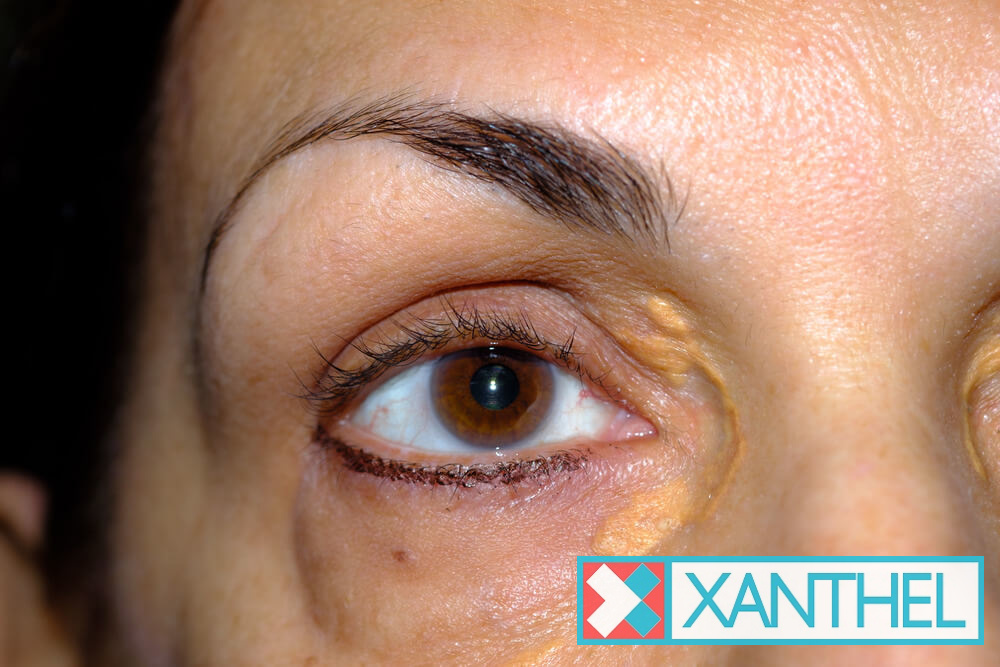
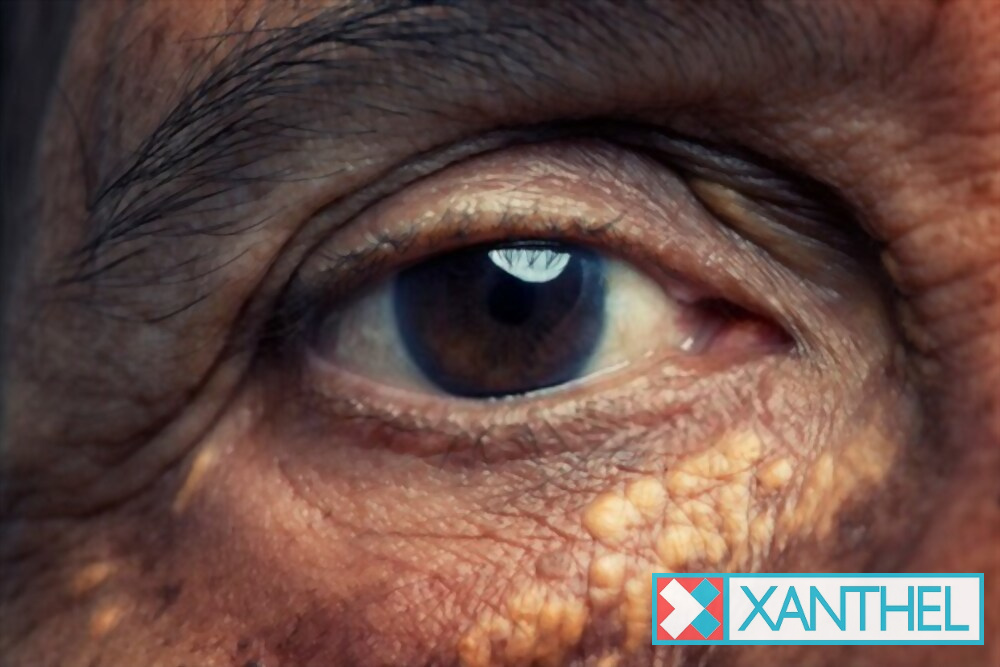
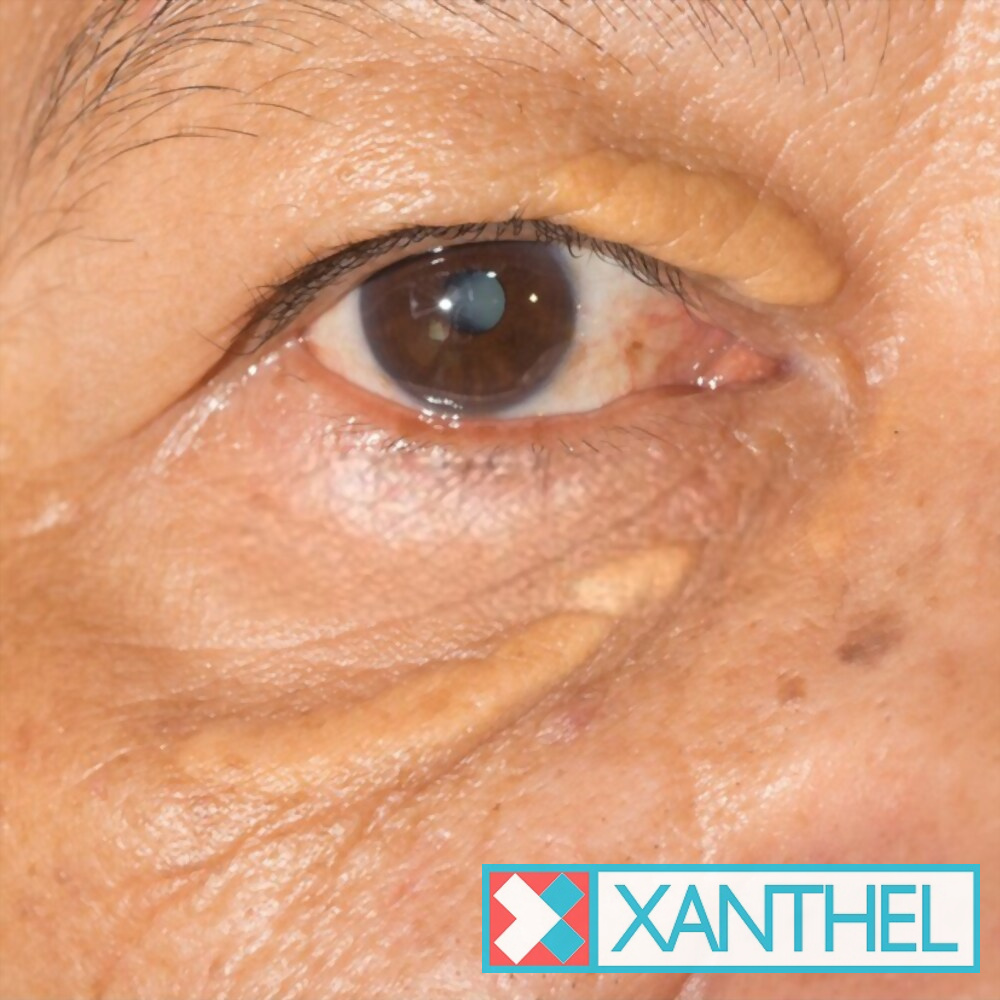
Cholesterol deposits on skin are build-ups of fat-filled cells in the top layers of the skin, seen as soft yellow patches or bumps. On the eyelids they’re called xanthelasma. Anywhere else on the body they’re called xanthomas.
- They almost always form on the eyelids, where the skin is thinnest.
- They look yellow because the fat sits just under the surface.
- Yellow lumps on the elbows, knees, hands or heels are xanthomas.
- Xanthomas on the body are more strongly linked to high blood fats.
- Patches are painless and harmless, but often grow slowly.
- Any cholesterol deposit is a good reason for a blood test with your doctor.
- Xanthel® xanthelasma removal cream is a cosmetic gel made for your skin type to improve the look of eyelid patches.
What Are Cholesterol Deposits On Skin?
Cholesterol deposits on skin are small collections of fat that have settled in the skin rather than staying in the blood. They show up as soft yellow or orange patches, or as firmer yellow bumps. By far the most common place for them is the eyelids, where they’re known as xanthelasma palpebrarum, or skin xanthelasma.
Your blood carries different kinds of cholesterol. Some is helpful, and some, like LDL, causes problems when there’s too much of it. Raised blood fats are one of the main reasons these deposits appear, though they’re not the only one. Many people first search for cholesterol skin bumps or cholesterol spots on the face long before they learn the medical names.

Why Do Cholesterol Deposits Under Skin Show On The Eyelids?
Skin varies a lot in thickness around the body. The skin on your eyelids is among the thinnest you have, and it’s packed with tiny blood vessels. It also moves thousands of times a day as you blink.
Doctors think that fat from the blood slips out of these small vessels more easily in thin, busy skin. Once it’s there, immune cells called macrophages soak it up. Full of fat, they swell and turn foamy and yellow, and are known as foam cells. When enough of them gather together just under the surface, you see a soft yellow patch.
Because the deposit sits so close to the surface, the colour shows through clearly. That’s also why most patches are flat or only slightly raised rather than deep lumps. Over months or years, more foam cells can collect at the edges, so patches tend to stay the same or slowly spread. They rarely fade by themselves.
Thicker skin elsewhere hides small deposits better, which is one reason xanthomas on the body are often only noticed when blood fats are very high.

Facial Cholesterol Deposits: Catch Them Early
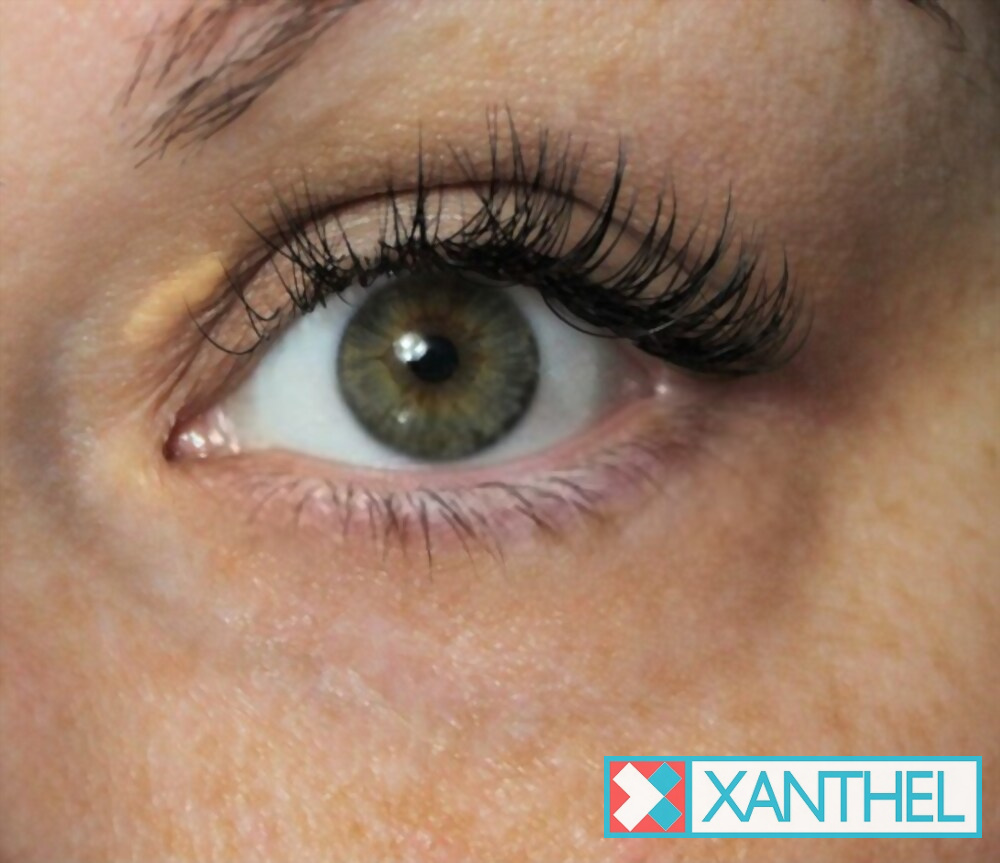
On the face, early cholesterol deposits can look like a faint yellow tint near the inner corner of the eye. They’re easy to mistake for a shadow. The earlier you notice them, the smaller the area to deal with.

Cholesterol Spots On Skin: Eyelid Or Elsewhere?
| Sign | On the eyelids: xanthelasma | Elsewhere: xanthoma |
|---|---|---|
| Looks like | Soft, flat or slightly raised yellow patches | Firm yellow lumps, small bumps or flat yellow areas |
| Where | Usually the inner corner of the upper or lower lid | Elbows, knees, hands, heels, buttocks or skin creases |
| Cholesterol link | Raised in about half of people | Usually linked to high cholesterol or triglycerides |
| Cosmetic option | Xanthel®, made for eyelid skin | See your doctor for a blood test and advice |
Both come from fat-filled cells in the skin, but deposits on the body, called xanthomas, are more often a sign of a lipid disorder.
How Doctors Check Cholesterol Skin Bumps
Most of the time a doctor can tell what a cholesterol skin bump is just by looking at it. If there’s any doubt, a small sample can be taken and checked under a microscope, where the fat-filled foam cells are easy to see. The more useful test is usually a blood test, which shows whether your cholesterol, triglycerides or blood sugar need attention.

What Causes Cholesterol Deposits In Skin?
The most common cause is raised fat in the blood: high LDL cholesterol, high triglycerides or low HDL cholesterol. Some people inherit a tendency to very high cholesterol, called familial hypercholesterolaemia, and often develop deposits younger.
But blood fats aren’t the whole story. About half of people with eyelid cholesterol deposits have normal levels, according to NIH StatPearls. Diabetes, an underactive thyroid, liver or kidney conditions, some medicines, smoking and carrying extra weight can all play a part. Our guide to xanthelasma causes covers each one.
Cholesterol deposits on the skin can also be linked to heart health. A large Danish study published in the BMJ found that people with eyelid xanthelasma had a higher risk of heart attack and heart disease, even with normal cholesterol. That’s why a simple check-up with your doctor is always worth it, especially if you have deposits on your body as well as your eyelids. For the eyelid patches themselves, our xanthelasma treatment guide compares every option side by side, from clinics to home.

How To Get Rid Of Cholesterol Deposits On Skin
For deposits on the body, see your doctor first, as treating the cause often helps them shrink. Our xanthoma removal page explains the options. For eyelid patches, our xanthelasma removal guide compares clinic options, and Xanthel® xanthelasma removal cream is a cosmetic gel designed to improve their look at home, usually in one application.
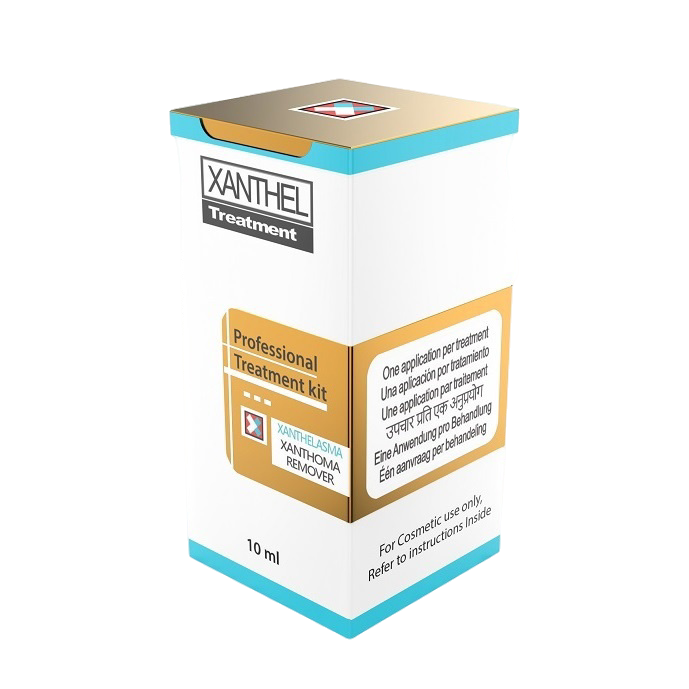
Xanthelasma Cream For Cholesterol Deposits On Your Eyelids
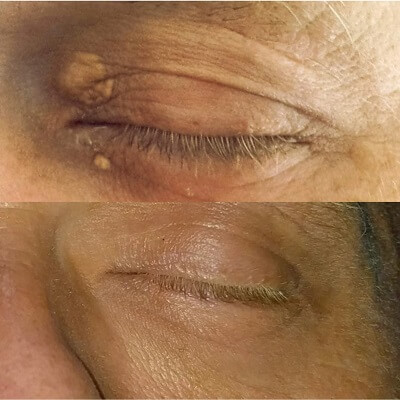
Got cholesterol deposits on the skin of your eyelids? Xanthel® xanthelasma removal cream is a cosmetic gel designed to improve the look of xanthelasma, so you can feel confident without make-up or a clinic visit. Results vary from person to person.
Made For Eyelid Skin
Every kit is formulated to order for your skin type and tone, and made for the thin skin around your eyes.
One Simple Step
Usually just one application at home, no needles and no downtime, with free tracked delivery included.
Cholesterol Deposits On Skin: Questions People Ask
Are Cholesterol Deposits On Skin Dangerous?
The deposits themselves aren’t. They’re harmless and painless, but they’re worth a blood test because they can point to raised blood fats.
Are Cholesterol Skin Tags A Thing?
Not really. Skin tags are soft, skin-coloured flaps, not fat deposits. They’re more common with diabetes or raised blood fats, but they’re a different thing from xanthelasma.
Can Cholesterol Deposits Under Skin Go Away?
Xanthomas on the body sometimes shrink once blood fats are treated. Eyelid patches rarely fade on their own and usually need treating.
Why Do I Have Cholesterol Spots On My Face?
The eyelid skin is very thin, so fat deposits show there first. Other spots on the face are more likely to be milia or something else.
Can Xanthel® Be Used On Cholesterol Deposits On The Body?
Xanthel® is made for xanthelasma on and around the eyelids. For deposits elsewhere, ask your doctor first.