
What Is Xanthelasma? A Simple Definition
Key Takeaways
What is xanthelasma? It’s a soft, yellow patch of cholesterol-rich fat just under the skin, usually on or around the eyelids. The name comes from the Greek for “yellow plate”. It’s harmless, but it’s a good reason to have your cholesterol checked.
- It’s more common in women than men, at about 1.1% of women and 0.3% of men.
- It usually appears between the ages of 35 and 55.
- About half of people with it have normal cholesterol levels.
- It can run in families, and is linked with diabetes, thyroid and liver problems.
- It doesn’t go away on its own, and patches can slowly grow.
- Xanthel® xanthelasma removal cream is a cosmetic gel made for your skin type to improve its look at home.
What Is Xanthelasma?
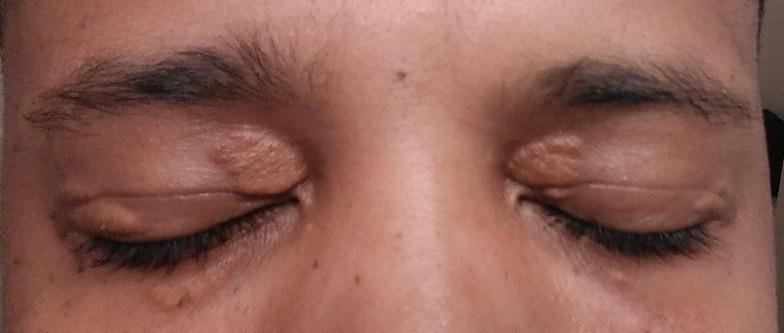
Xanthelasma is the medical name for flat or slightly raised yellow patches on the eyelids, most often near the inner corner of the eye. The full name is xanthelasma palpebrarum, which simply means “yellow plate of the eyelids”. The patches are soft, painless and don’t affect your sight. They’re often small at first, then spread slowly across the eyelid over months or years.
Xanthelasma Meaning: A Short Glossary
| Term | What it means |
|---|---|
| Xanthelasma | Soft, yellow, cholesterol-rich patches on or around the eyelids. |
| Xanthelasma palpebrarum | The full name for xanthelasma. Palpebrarum means “of the eyelids”. |
| Xanthoma | The wider group of fatty deposits in the skin. Xanthelasma is the most common type. |
| Foam cells | Skin immune cells filled with fat droplets, which give xanthelasma its yellow colour. |
| LDL cholesterol | Often called “bad” cholesterol. High levels are linked to xanthelasma and heart disease. |
| HDL cholesterol | Often called “good” cholesterol. Low levels are also linked to xanthelasma. |
| Triglycerides | A type of fat in the blood, measured alongside cholesterol in a lipid test. |
| Lipid profile | A blood test that measures your cholesterol and triglyceride levels. |
See more examples in our what does xanthelasma look like guide.
Is Xanthelasma A Sign Of High Cholesterol?
Sometimes. Yellow patches are one of the few high cholesterol symptoms you can see on the skin around the eyes, so they’re well worth taking seriously. But about half of people with xanthelasma have completely normal cholesterol levels, according to NIH StatPearls. In the other half, a blood test shows raised LDL cholesterol, raised triglycerides or low HDL cholesterol.
There’s also a link with heart health that goes beyond cholesterol. A large Danish study of nearly 13,000 people, published in the BMJ, found that people with xanthelasma had a higher risk of heart attack and heart disease, even when their cholesterol was normal. That doesn’t mean something is wrong. It means a simple check-up is a sensible idea.
Xanthelasma can also run in families, and it’s more common in people with diabetes, an underactive thyroid or liver problems. Our guide to xanthelasma causes explains each of these in more detail. Other visible signs of raised cholesterol include fatty lumps on the elbows, knees or tendons, and a pale ring around the coloured part of the eye, which our page on high cholesterol eyes explains.
Is Xanthelasma Harmful?
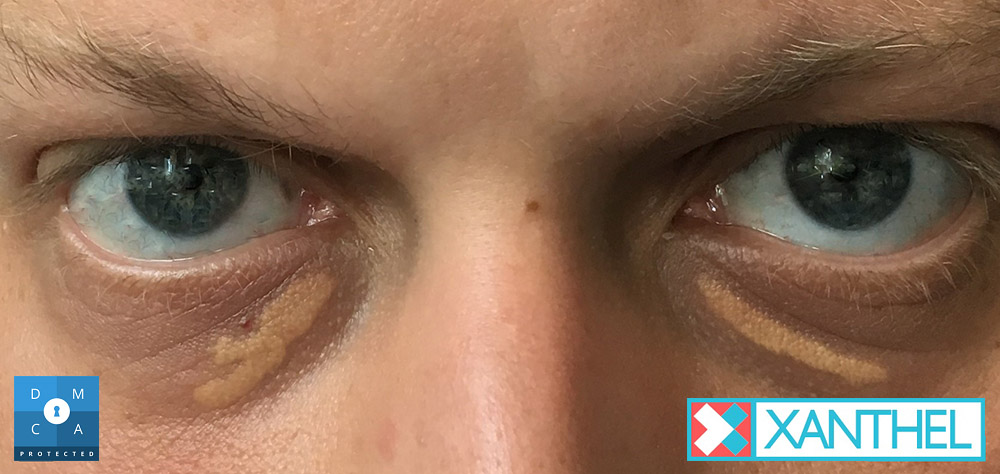
No. Xanthelasma isn’t cancerous, it isn’t contagious and it won’t damage your eyes. It doesn’t hurt or itch, and most people only notice it when they look in the mirror. Very large patches can occasionally make the eyelid feel a little heavy, but that’s rare. It doesn’t turn into anything else either, though patches can slowly grow and new ones can appear over the years.
What it can affect is how you feel.
Many people find the patches knock their confidence, especially as they’re right in the middle of the face. That’s a perfectly good reason to want them dealt with, and there are several options for xanthelasma removal, from clinic options to a cosmetic gel you use at home.

What Are Cholesterol Deposits?
Cholesterol deposits are small collections of fat that have settled in the skin instead of travelling round in the blood. They’re made of the same kind of fat that a cholesterol blood test measures. When the deposits sit on the eyelids, they’re called xanthelasma. Elsewhere on the body, such as the elbows, knees or tendons, they’re called xanthomas.
Many people search for “cholesterol deposits” before they ever hear the word xanthelasma, and that’s no surprise. The plain-English name says exactly what they are. If yours are on or around the eyelids, our guide to cholesterol bumps on the eyelid shows what they look like, and the cholesterol deposits around the eyes page covers patches that spread wider.
Xanthelasma Symptoms: What To Look For
The signs are easy to spot once you know them. Look for soft, yellow or orange-yellow patches, usually flat or slightly raised, with clear edges. They most often start near the inner corner of the upper eyelid and can appear on both eyes. They don’t hurt, itch or bleed, and they feel soft rather than hard. Some people have a single small patch, while others have several that slowly join up into a band across the eyelid.
Xanthelasma Or Milia? How To Tell The Difference
Milia are tiny, hard, white bumps, like grains of sand under the skin. They’re made of trapped keratin, not cholesterol, and often clear by themselves. They’re common at any age and can appear anywhere on the face. Xanthelasma patches are yellow, soft, flatter and usually bigger, and they almost always stay on or close to the eyelids. A doctor can usually tell the two apart at a glance. If a bump grows quickly, bleeds, crusts or looks different from these, ask a doctor to check it. Our pictures of xanthelasma can help you compare.
Xanthelasma Pathology: What Happens Under The Skin
Under a microscope, xanthelasma is made up of foam cells. These are immune cells, called macrophages, that have soaked up fat until they look foamy. They gather around small blood vessels in the upper layers of the skin, mainly the superficial dermis.
Doctors think fat from the blood slips out of these tiny vessels into the thin, delicate eyelid skin, where the foam cells collect it. The constant movement of blinking may play a part too. Because the deposits sit close to the surface, they show through as yellow. This is also why a doctor can usually tell what it is just by looking, without a biopsy, and why Xanthel® is designed to work on the skin’s surface.

What Can You Do About Xanthelasma?
Xanthelasma doesn’t usually fade by itself, and it often stays the same or grows slowly. So if it bothers you, it’s worth knowing your options. There are two sides to it: your health and the look of the patches.
For your health, start with a cholesterol blood test. If your levels are raised, your doctor may suggest changes to your diet, more exercise or a medicine such as a statin. Stopping smoking and keeping to a healthy weight help too. That’s good for your heart and may make new patches less likely, though it rarely shrinks the ones you already have. Our xanthelasma diet guide has simple food swaps to help.
For the patches themselves, clinics offer laser, freezing, chemical peels and minor surgery. Laser and freezing may need more than one session. Each has its own costs, recovery time and risks, and patches can come back after any method. Our xanthelasma treatment guide compares them side by side.
Whatever you choose, steer clear of DIY methods near your eyes. Acids, garlic, needles and squeezing can burn or mark the thin eyelid skin, and they don’t reliably work. If you’d like to try something gentle first, our guide on getting rid of xanthelasma naturally is honest about what helps.
Many people prefer something simpler and more private. Xanthel® xanthelasma removal cream is a cosmetic gel designed to improve the look of xanthelasma at home, usually with a single application. It’s private, takes a couple of minutes and involves no needles or clinic visits. Each kit is formulated to order for your skin type and tone, and you can see real results in our before and after photos. Results vary from person to person.

When To See A Doctor About Xanthelasma
It’s worth seeing a doctor once, even if the patches don’t bother you. They can confirm it’s xanthelasma, usually just by looking, and arrange a blood test for your cholesterol, blood sugar and thyroid. That’s especially worth doing if you’re under 40, or if heart disease or high cholesterol runs in your family. Your doctor or a dermatologist can also talk you through clinic treatments if you’re considering one. See a doctor sooner if a patch grows fast, bleeds or hurts.
Your Next Steps
- Check it’s xanthelasma. Compare yours with our xanthelasma images.
- Book a blood test. Ask your doctor to check your cholesterol and blood sugar.
- Look after your heart. Eat well, move more and stop smoking if you smoke.
- Leave the patches alone. Don’t squeeze them or put acids or garlic near your eyes.
- Pick an option you’re happy with. From clinic treatments to Xanthel® at home.
- Keep an eye on changes. See a doctor if a patch grows fast, bleeds or hurts.
Have a question about your own patches? Get in touch with our team and a real person will reply. Whatever you decide about the patches, getting your cholesterol checked is the one step worth taking for everyone.
What Is Xanthelasma? Questions People Ask
How Do You Pronounce Xanthelasma?
Zan-thuh-LAZ-muh. The “x” sounds like a “z”, and the stress falls on “laz”.
What Does Xanthelasma Mean?
It comes from the Greek xanthos, meaning yellow, and elasma, meaning plate. Palpebrarum is Latin for “of the eyelids”.
Is Xanthelasma The Same As Xanthoma?
Xanthelasma is one type of xanthoma. Xanthoma is the general name for fatty deposits in the skin anywhere on the body.
Is Xanthelasma Contagious?
No. It can’t be caught or passed on by touch. It forms from fat in your own blood.
Does Xanthelasma Go Away On Its Own?
Very rarely. Most patches stay the same or slowly grow, so they usually need treating if you want them gone.
Xanthelasma Cream: Your At-Home Option
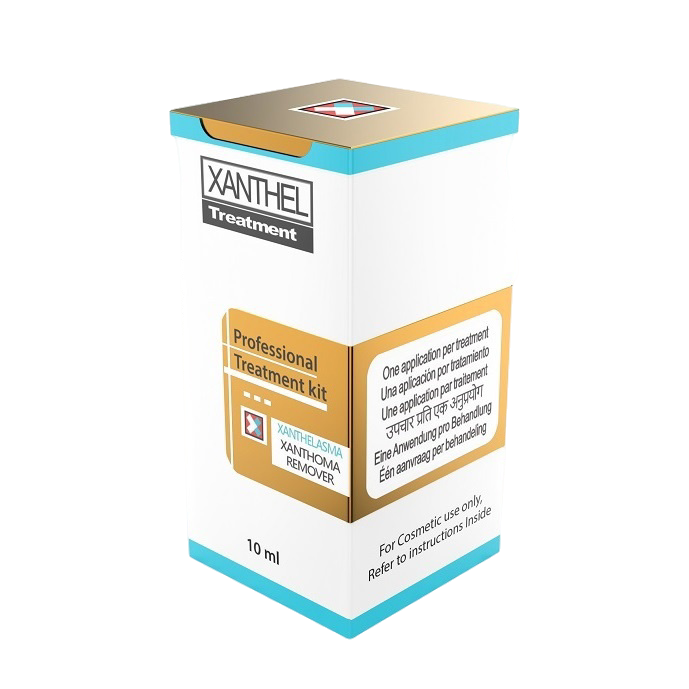
Know what xanthelasma is, and want to see less of it? Xanthel® xanthelasma removal cream is a cosmetic gel designed to improve the look of xanthelasma in the comfort of your own home, so the face in the mirror feels like yours again. Results vary from person to person.
Formulated For Your Skin
Every kit is made to order for your skin type and tone, so the gel suits your skin rather than everyone’s.
Private, Quick And Easy
Apply it at home in a couple of minutes, usually just once, with no needles, no clinic visit and free tracked delivery.