
Xanthelasma Treatment: Every Option Explained
Key Takeaways
Xanthelasma treatment has two parts: checking the cause with your doctor, and improving the look of the patches. Managing cholesterol protects your health but rarely removes existing patches. For those, the options are an at-home cosmetic gel or a clinic procedure such as laser, freezing, a chemical peel or surgery.
- Xanthelasma rarely goes away on its own once it has formed.
- Start with a blood test with your doctor for cholesterol, blood sugar and thyroid.
- Diet, exercise and cholesterol medicine help your heart but won’t clear existing patches.
- Garlic and castor oil won’t remove patches, and applying them can irritate or burn the skin.
- Clinic procedures can work well, but carry risks of scarring, colour change and downtime.
- Patches can return after any method, so keeping cholesterol in check still matters.
- Xanthel® is a cosmetic gel made for your skin type and used at home. Results vary.
Will Xanthelasma Go Away Without Treatment?
Usually not. Once xanthelasma has formed, the patches tend to stay the same or slowly grow, and they very rarely fade by themselves. That’s why most people end up looking for a xanthelasma treatment, but the first step is making sure it really is xanthelasma.
A doctor can usually tell just by looking. Xanthelasma is soft, yellow and painless, and sits on the eyelids, often near the nose. Other eyelid bumps can look similar: a stye is red, sore and full of pus, milia are tiny, hard white spots, and syringomas are small, firm, skin-coloured bumps from sweat glands. Each of these needs a different approach.
Your doctor will also usually suggest a blood test. About half of people with xanthelasma have normal cholesterol, according to StatPearls, but it’s still worth checking your cholesterol, blood sugar and thyroid. Then you can focus on the patches themselves, from home remedies to clinic procedures. Some of the options you’ll read about online are myths, and a few can cause real harm, so we go through each one honestly below.
The Two Parts Of Xanthelasma Treatment
Part 1: Check And Manage The Cause
- A blood test with your doctor for cholesterol and triglycerides
- Checks for diabetes, thyroid and liver problems
- A healthy diet, regular exercise and no smoking
- Cholesterol medicine if your doctor recommends it
- Helps stop new patches forming, but rarely removes existing ones
Part 2: Improve The Appearance
- Xanthel® cosmetic gel, made for your skin type and used at home
- Surgery for large or thick patches
- Laser or freezing in a clinic
- Chemical peels such as TCA, by a professional only
- See every method in our xanthelasma removal guide
Doing both gives you the best chance of clearer skin and fewer new patches.
Xanthelasma Treatment Options Compared
Here is how the main options stack up. Each one is covered in more detail further down.
Xanthelasma Treatment Options Side By Side
| Option | Where | Good to know |
|---|---|---|
| Xanthel ® | At home | Cosmetic gel made for your skin type, usually applied once; results vary |
| Laser | Clinic | No stitches; may need more than one session; risk of colour change |
| Freezing | Clinic | Quick; can leave lighter skin, especially on darker skin tones |
| TCA peel | Clinic only | Several sessions; never safe to try at home |
| Electrolysis | Clinic | Less common; best for small patches; risk of small scars |
| Surgery | Clinic | Most direct for large patches; leaves a scar line; usually costs most |
| Garlic or castor oil | Home | Won’t remove patches; can irritate or burn eyelid skin |
| Cholesterol care | With your doctor | Protects your heart; rarely clears existing patches |
For costs and recovery, see every xanthelasma removal method compared
How Xanthel® Works
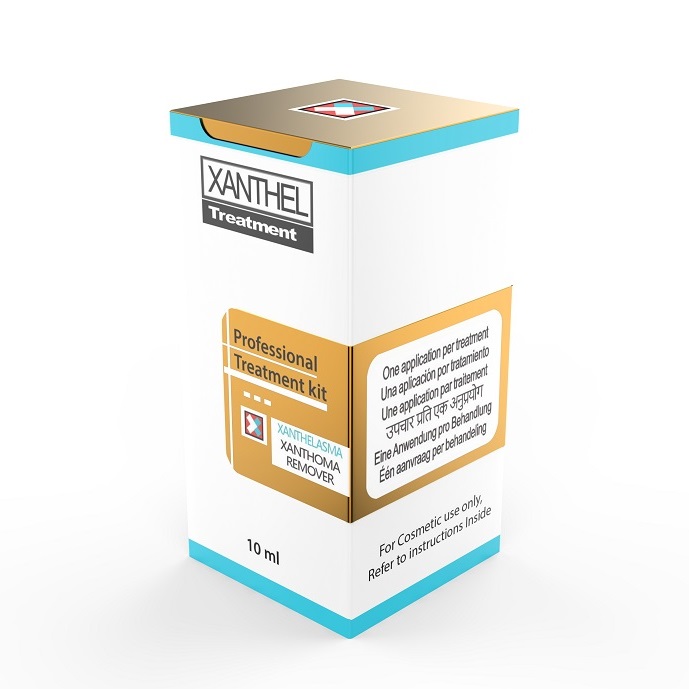
Xanthel ® is a cosmetic gel made specifically for xanthelasma. Our founder, P. Cutler, developed it with consultant dermatologists after living with xanthelasma himself. Each kit is made up to order for your skin type and tone, and for where your patches are, so the formula suits you rather than being one size for everyone.
You apply it at home, usually just once, following the step-by-step instructions in the kit. There are no needles, no clinic visits and no time off work. It’s designed to improve the look of xanthelasma, and results vary from person to person.
Not sure whether it’s right for your patches? You can email us a clear photo for a