What Does Xanthelasma Look Like? Signs, Colours And Photos
Key Takeaways
Xanthelasma looks like soft, flat or slightly raised yellow patches on the eyelids, usually at the inner corners near the nose. The patches are painless, have fairly clear edges and often appear on both eyes.
- The colour is pale yellow to orange-yellow, not white, red or brown.
- It feels soft and velvety, never hard, crusty or scaly.
- It’s most common on the upper lids, and can appear on the lower lids too.
- Patches grow slowly and can join together over time.
- It can be a sign of raised cholesterol, so a blood test from your doctor is worth having.
- Compare yours with our pictures of xanthelasma, or see our xanthelasma removal cream.
What Do Cholesterol Spots Look Like?
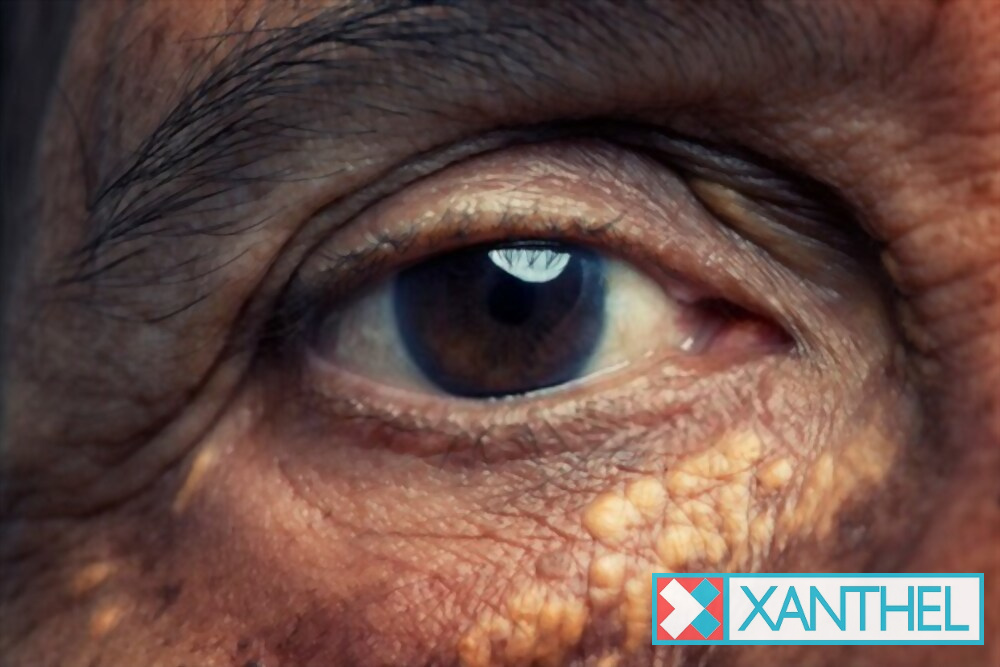
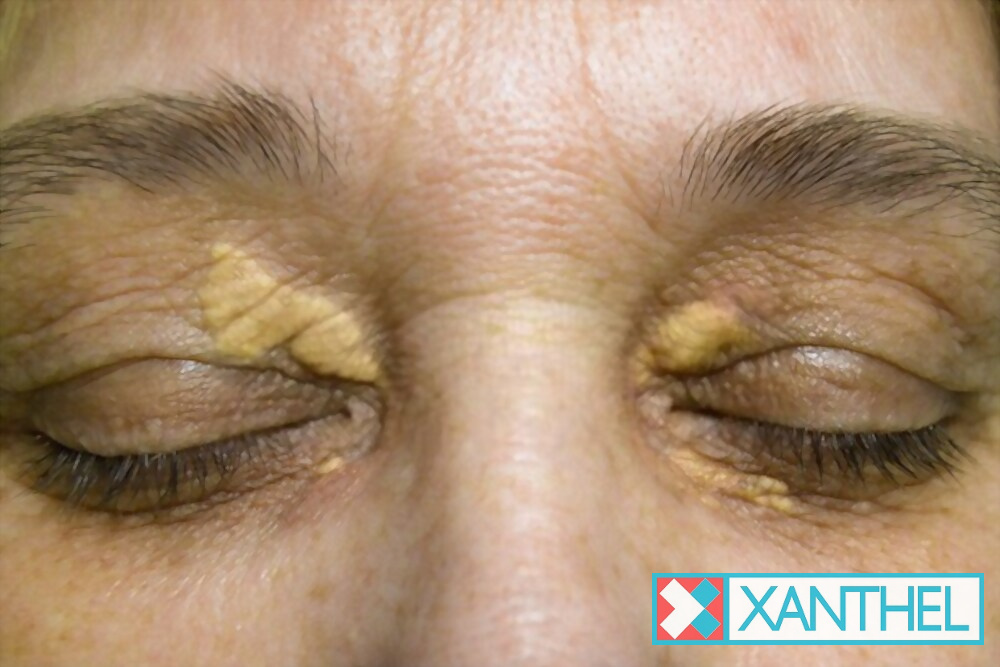
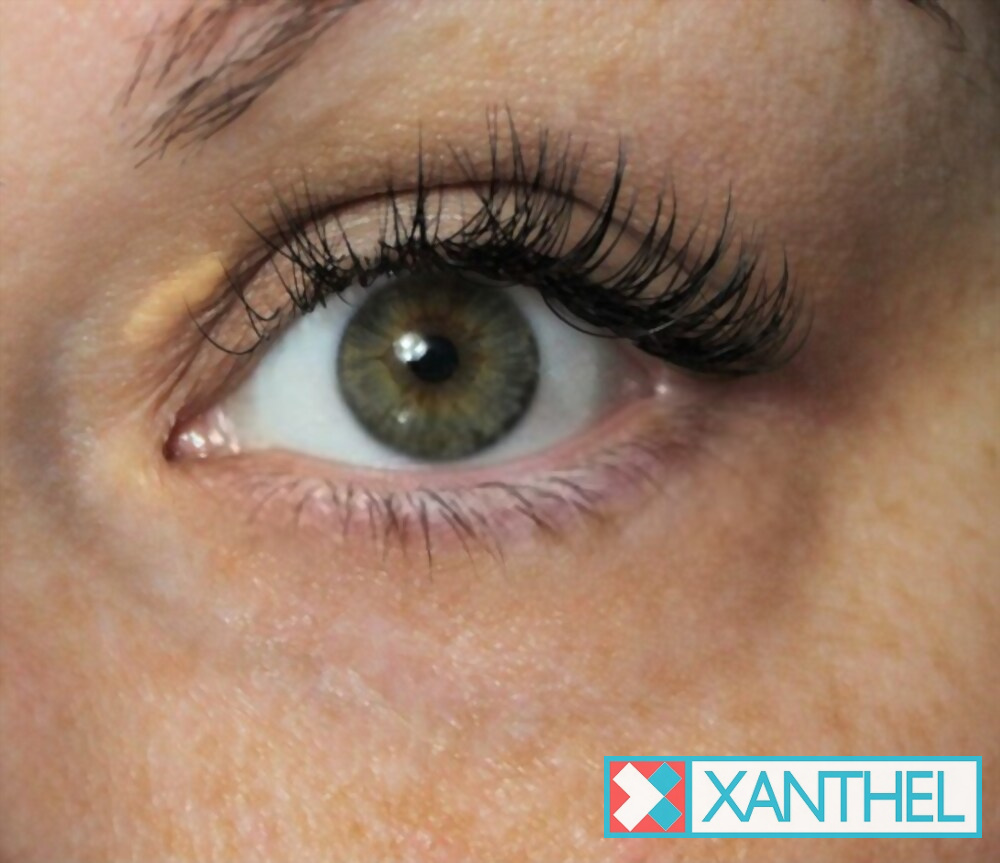
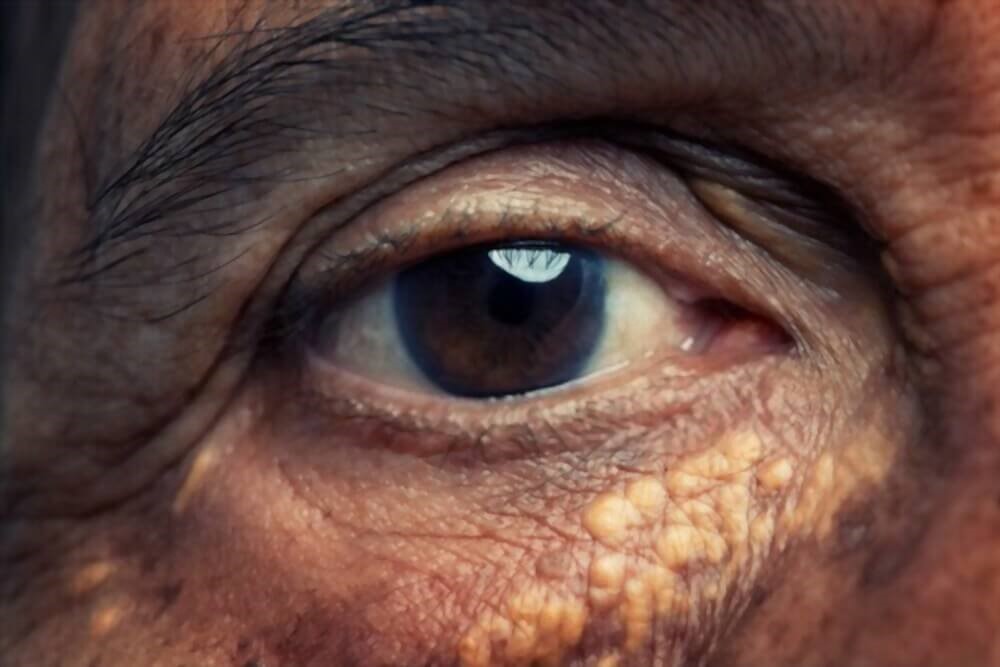
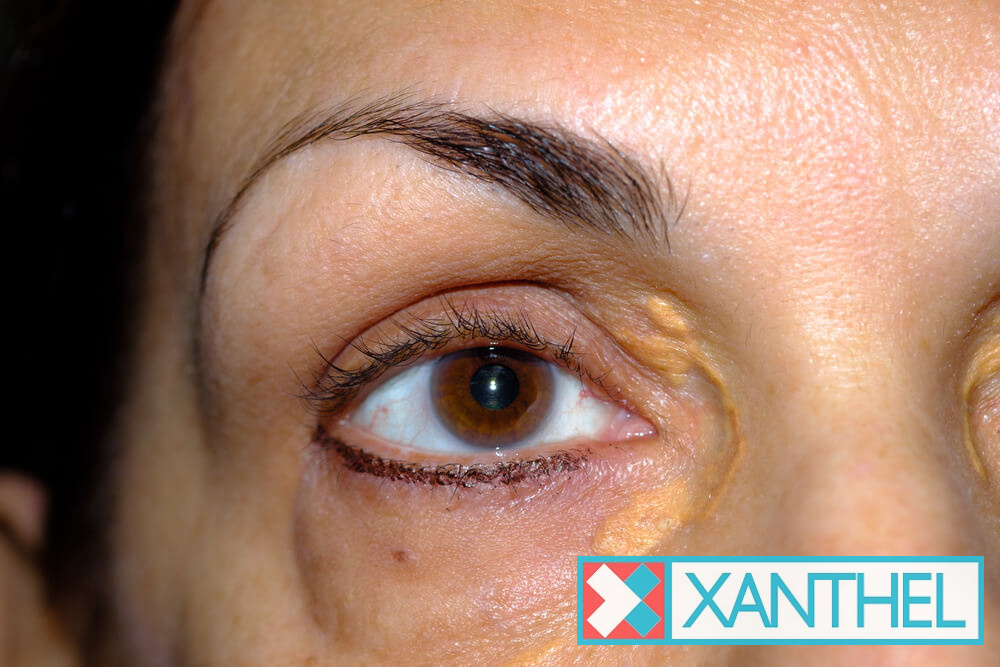
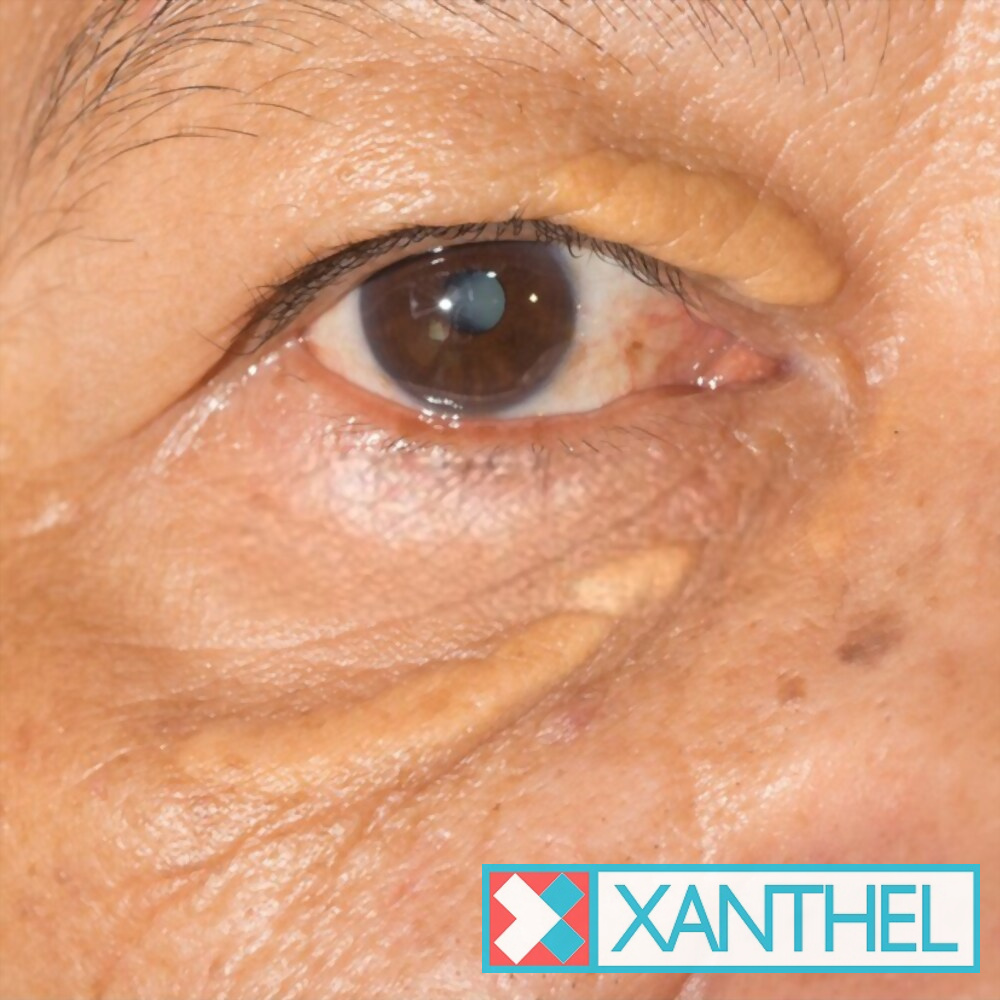
Xanthelasma, often called cholesterol spots or cholesterol deposits, shows up as soft yellow patches on or around the eyelids. Most people first notice a small, flat, buttery-coloured mark at the inner corner of the upper eyelid, close to the nose. It can look a little like a smear of yellow under the skin.
Here’s what to look for:
- Colour: pale lemon to orange-yellow, clearly different from the skin around it.
- Shape: oval, oblong or irregular, with fairly well-defined edges.
- Texture: soft and velvety, either flat or slightly raised.
- Size: from a few millimetres to patches covering much of the eyelid.
- Feel: painless and not itchy.
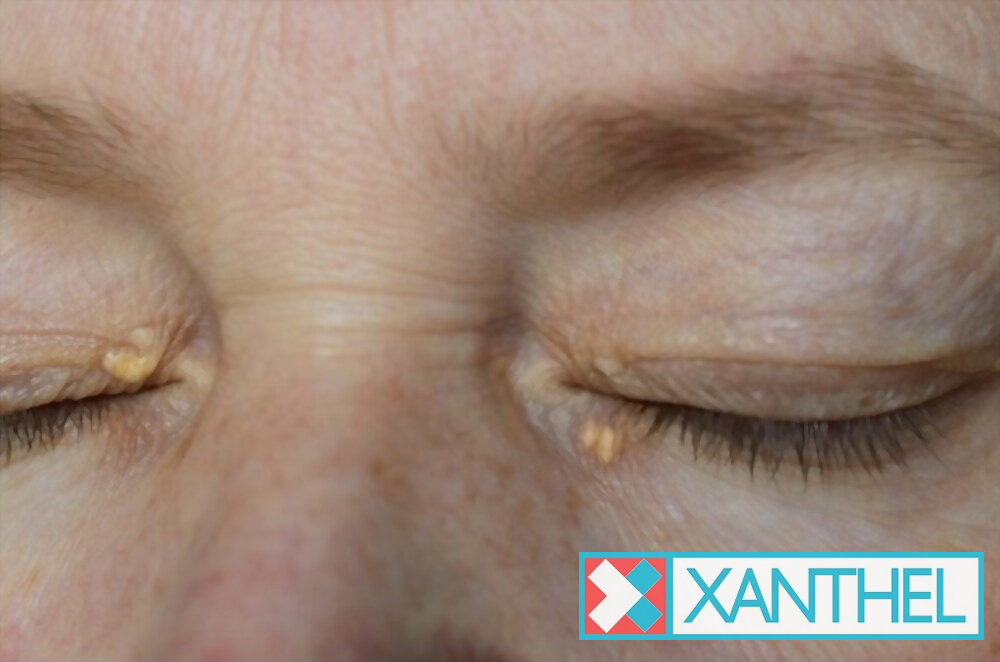
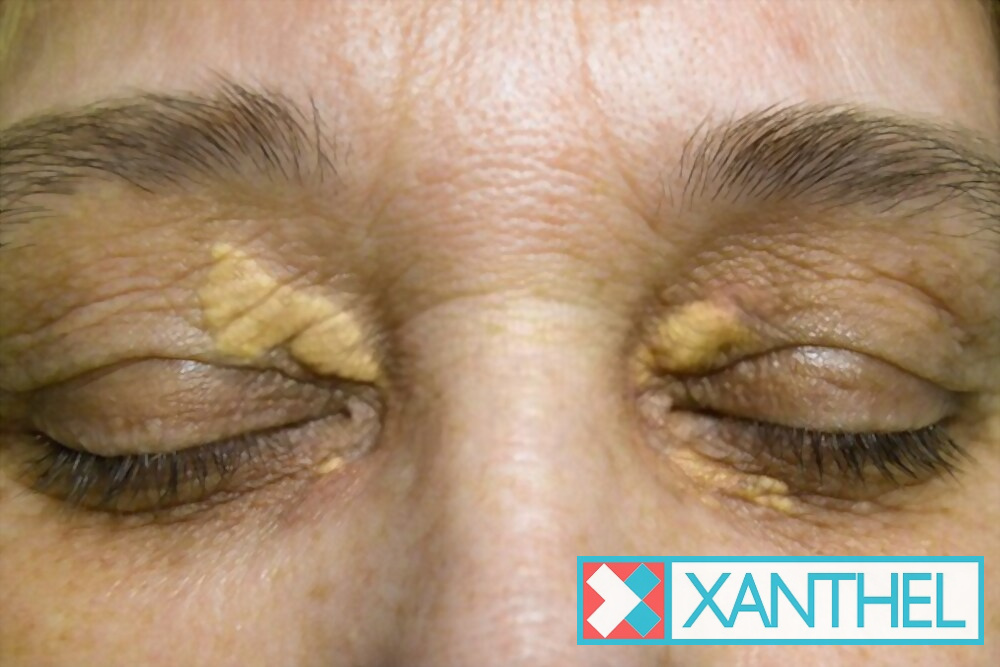
Patches often appear in clusters and are commonly on both eyes, sometimes in an almost mirror-image pattern. They don’t hurt, bleed or weep, and they won’t affect your eyesight because they sit in the skin of the eyelid, not in the eye itself. Many people only notice them when a friend mentions them or when they catch the light in a photo.
How Xanthelasma Changes Over Time
Xanthelasma usually starts as one small spot and grows slowly over months or years. New patches can appear nearby, and neighbouring patches can merge into one larger area that stretches along the lid. It very rarely fades on its own.
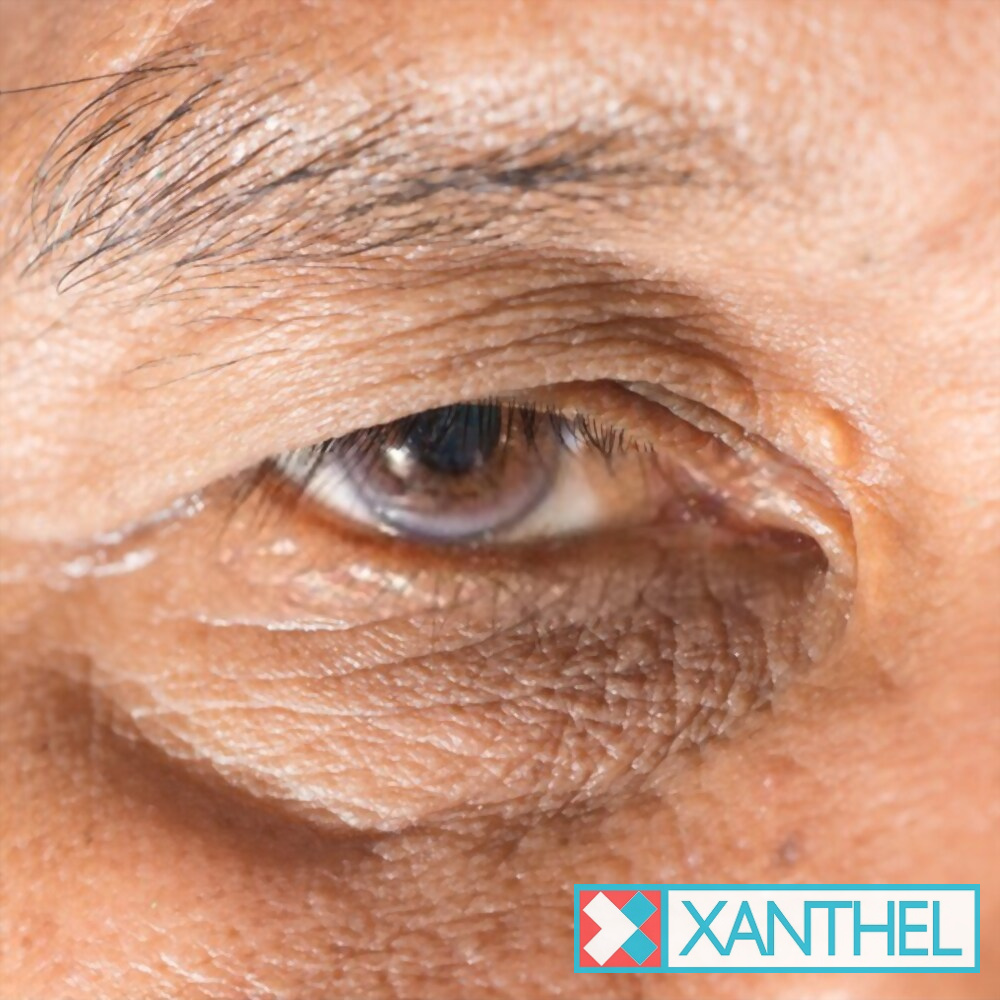
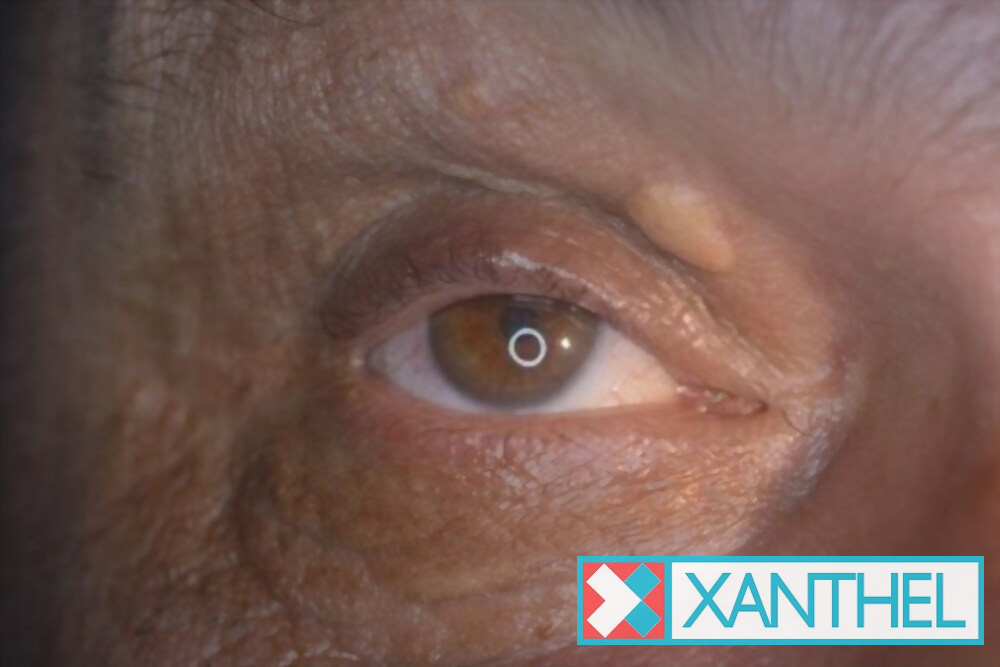
The exact shade depends on your skin. On fair skin, patches tend to look bright yellow; on darker skin tones they can look more orange or tan. True xanthelasma isn’t brown, white or red, though, so a mark in one of those colours is more likely to be something else.
Resist the urge to squeeze, pick or scratch a patch. It won’t come out like a spot, and the eyelid skin is thin and easily damaged. If you’re not sure what you have, let a doctor take a look first. Most can tell straight away.
Xanthelasma Or Something Else?
| Condition | Colour | Feel and shape | Usually found |
|---|---|---|---|
| Xanthelasma | Yellow to orange-yellow | Soft, flat or slightly raised patches | Inner corners of the eyelids |
| Milia | Pearly white | Tiny, hard, round bumps | Around the eyes, cheeks and nose |
| Syringoma | Skin-coloured or pale yellow | Small, firm bumps in clusters | Lower eyelids |
| Chalazion | Skin-coloured or red | A single firm, round lump, sometimes swollen | In the eyelid, near the lashes |
Not sure what you have? A doctor or pharmacist can usually tell just by looking.
How To Check Your Own Eyelids
Stand by a window in natural daylight, without make-up, and look closely at both eyes in a mirror. Check the inner corners first, then the upper and lower lids. Note the colour, whether the mark is flat or raised, and whether it’s on one eye or both.
Then compare what you see with our xanthelasma photo gallery. If yours matches, it’s very likely xanthelasma, and a doctor can confirm it in a quick appointment.
Is It A Bump, A Spot Or A Patch?
Xanthelasma can look like a bump, especially when it’s slightly raised, but it isn’t a pimple. It never comes to a head, doesn’t contain pus and won’t burst. It’s a soft patch of fat-filled cells sitting just under the skin.
Some people also get milia, tiny white bumps, in the same area. They’re harmless and unrelated, but the two can be seen side by side. If a lump is red, tender or appeared overnight, it’s more likely to be a stye.
What Gives Xanthelasma Its Yellow Colour?
The yellow colour comes from cholesterol. Xanthelasma palpebrarum forms when cells called foam cells, packed with fats, gather in the skin of the eyelids. That fatty build-up is what you see through the thin eyelid skin.
It’s often linked to raised cholesterol or triglycerides, but around half of people with xanthelasma have normal levels, according to NIH StatPearls. Either way, it’s worth asking your doctor for a blood test. Our guide to xanthelasma causes explains why. It’s a simple test, and finding raised cholesterol early gives you the chance to bring it down through diet, exercise or medicine if needed.
Where Is Xanthelasma Most Common?
The most common spot is the inner corner of the upper eyelid. Patches can also form on the lower lid, under the eye, and at the outer corners, and they often appear on both sides, known as bilateral xanthelasma. Similar yellow deposits elsewhere on the body, such as the elbows or knees, are called xanthomas and are worth showing to a doctor.
What Does Xanthelasma Look Like? Questions People Ask
Can Xanthelasma Be White Or Brown?
No. Xanthelasma is yellow to orange-yellow. White bumps around the eyes are usually milia, and brown marks are more likely to be moles, age spots or something else.
Does Xanthelasma Look Like A Pimple?
It can look like a raised bump, but it isn’t a pimple. It doesn’t come to a head, contain pus or go away in a few days.
Is Xanthelasma Raised Or Flat?
It can be either. Many patches start flat and become slightly raised over time, but they always stay soft.
Can Xanthelasma Appear Suddenly?
It usually builds up slowly, though many people only notice it once a patch is already a few millimetres across. A lump that appears overnight is more likely to be a stye or chalazion.
What Does Xanthelasma Look Like On Dark Skin?
On darker skin tones, patches can look more orange or tan than yellow, but they have the same soft texture and usually sit at the inner corners of the eyelids.
Xanthelasma Cream: Now You Know What It Is
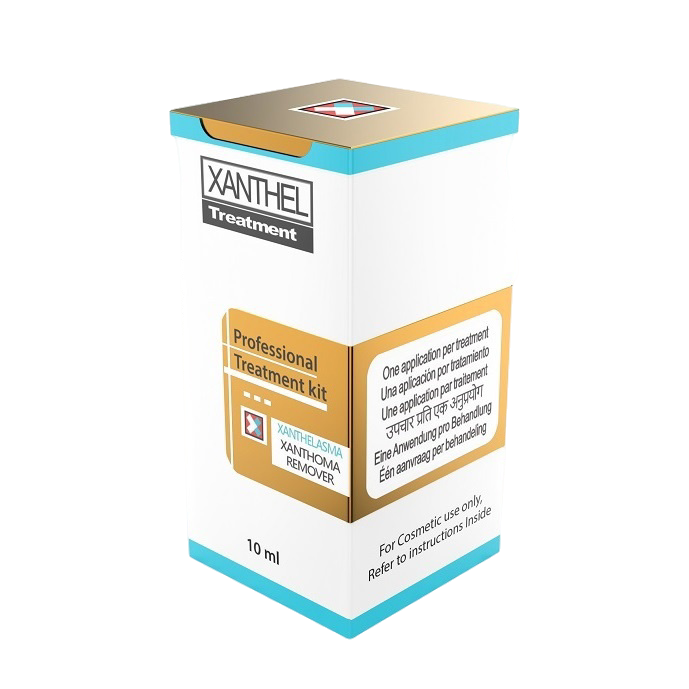
Recognised these signs on your own eyelids? Xanthel® xanthelasma removal cream is a cosmetic gel designed to improve the look of xanthelasma without needles, lasers or a clinic visit, so you can stop worrying about those patches every time you look in the mirror. Results vary from person to person.
Made For Your Skin
Each kit is formulated to order for your skin type and tone and other given criteria.
Simple, Private And Quick
Apply it at home in a couple of minutes, usually just once. No clinic, no needles, and free tracked delivery worldwide.