
Xanthomatous: What Are Xanthomas Of The Skin?
Xanthomatous meaning in plain English: what xanthomas of the skin are, why they appear and what you can do about them.
Key Takeaways
Xanthomas of the skin are yellow, fat-filled patches or lumps, and “xanthomatous” is the word that describes them, as in “xanthomatous lesions”. They’re usually painless and harmless, and the most common type is xanthelasma on the eyelids.
- The word comes from the Greek xanthos (yellow) and -oma (growth or swelling).
- Having many xanthomas at once is called xanthomatosis.
- They can appear on the eyelids, elbows, knees, hands, feet, tendons or buttocks.
- Most are linked to high cholesterol or triglycerides in the blood.
- Diabetes, an underactive thyroid, liver or kidney problems and some medicines can also play a part.
- A blood test with your doctor is the sensible first step, even if you feel well.
- Eyelid patches rarely fade on their own. See your xanthelasma removal options, including at-home Xanthel®.
What Are Xanthomas Of The Skin?
Xanthomas of the skin are yellow or orange patches, bumps or lumps made of fat-filled cells sitting just under the surface. “Xanthomatous” is simply the describing word for them. A doctor might write “xanthomatous lesions” in a letter, and that just means areas of xanthoma.
If you’ve come across the word in a clinic letter or a search result, try not to worry. Xanthomas are usually painless, they aren’t a form of cancer, and the most common kind by far is xanthelasma: soft yellow patches on the eyelids.
What they do deserve is a little attention. Because xanthomas form from fats in the blood, they can be a useful nudge to get your cholesterol, triglycerides and blood sugar checked. This guide explains what the word means, why xanthomatous patches appear, the main types you might hear about, and what you can do about the ones on your eyelids, which is where most people notice them first.

Xanthomatous Meaning: A Short Word Guide
| Word | What it means |
|---|---|
| Xanthoma | A yellow patch, bump or lump caused by fat-filled cells in the skin. Plural: xanthomas or xanthomata. |
| Xanthomatous | Relating to or containing xanthomas, as in xanthomatous lesions or xanthomatous papules. |
| Xanthomatosis | Having many xanthomas, often a sign of a problem with blood fats. |
| Xanthelasma | A flat xanthoma on or around the eyelids, and the most common type. |
| Xanthogranuloma | A different growth made of immune cells, mostly seen in children, and not caused by blood fats. |
| Foam cells | Immune cells filled with fat droplets, which give xanthomas their yellow colour. |
Every type side by side in our xanthoma guide
What Does Xanthomatous Mean?
Xanthomatous means “relating to or containing xanthomas”. It’s an adjective, not a separate condition, so you’ll see it in phrases like xanthomatous lesions, xanthomatous papules or xanthomatous plaques. When someone has lots of xanthomas, doctors call it xanthomatosis.
The word comes from Greek. Xanthos means yellow and -oma means a growth or swelling, so a xanthoma is, quite literally, a yellow swelling. That colour comes from foam cells: immune cells in the skin that have soaked up fat droplets from the blood, a bit like a sponge. Depending on how much fat they hold and how deep they sit, xanthomas can look pale yellow, deep yellow or orange. You’ll also see the plural written two ways, xanthomas or xanthomata, and both are correct.
They can turn up almost anywhere. The usual places are the eyelids, elbows, knees, knuckles, hands, feet, Achilles tendons and buttocks. Some are tiny dots a couple of millimetres across; others are firm lumps several centimetres wide. You might have a single patch or many in different areas, and the same person can have more than one type. Most grow slowly over months or years, and none of them is catching.
How do they feel? Most xanthomas don’t hurt at all. You may notice nothing more than the look of them, or a slight tightness in the skin. The exception is eruptive xanthomas, which can come up quickly and be itchy or tender. If a lump is painful, growing fast or bleeding, see a doctor rather than waiting.
On their own, xanthomas are harmless. They aren’t cancer and they don’t turn into cancer. The reason to take them seriously is what they can say about your blood fats. That’s why the sensible first step for any new xanthomatous patch is a simple blood test with your doctor, even if you feel perfectly well. Plenty of people only find out they have high cholesterol this way, and it’s far better to know early.
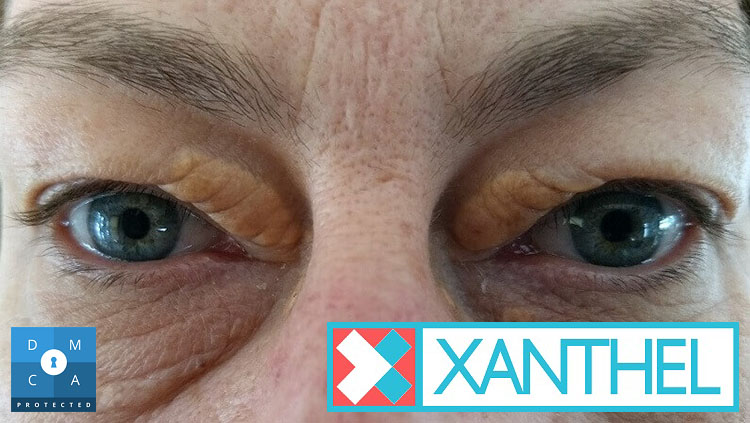
The eyelids are where most people first notice these deposits, as the photo below shows. If that’s where yours are, our guide to cholesterol bumps on the eyelid explains them in more detail.tes.
Why Do Xanthomatous Deposits Appear?
Most xanthomas are linked to fats in the blood. When cholesterol or triglyceride levels run high for a long time, some of that fat leaks into the skin or tendons, gets picked up by foam cells and slowly builds into a deposit you can see. Doctors call raised blood fats hyperlipidaemia, and it’s the most common reason behind xanthomatous lesions.
Sometimes the cause is inherited. Familial hypercholesterolaemia, for example, runs in families and can cause tendon xanthomas at a young age. Other times it’s diet and lifestyle, another health condition, or a medicine pushing blood fats up. Carrying extra weight, drinking a lot of alcohol and eating plenty of saturated fat can all nudge blood fats upwards.
It isn’t always about cholesterol, though. Flat xanthomas in someone with normal blood fats are occasionally linked to a blood disorder, as DermNet’s xanthoma guide explains, which is why a doctor may want to run a few extra tests. That’s rare, and it’s no reason to fear the worst. It simply shows why the cause matters more than the patch itself.
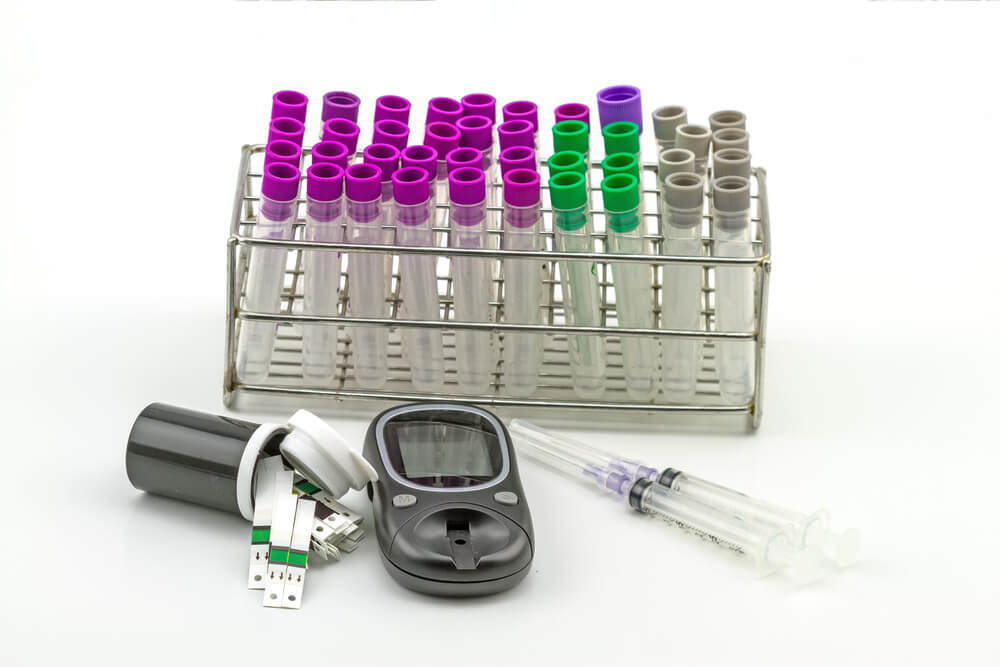
The good news is that most causes are easy to check. A lipid profile measures your cholesterol and triglycerides, and your doctor may add tests for blood sugar, thyroid, liver and kidney function. Treating what’s behind xanthomas often helps them settle, and it’s good for your heart too. The next sections look at the main health links one by one.
Diabetes, Thyroid And Kidney Links
Diabetes. When blood sugar isn’t well controlled, the body struggles to clear triglycerides from the blood. Levels can climb very high, and that’s the classic trigger for eruptive xanthomas: crops of small yellow-red bumps that appear over a few weeks. If you have diabetes and notice them, tell your diabetes team. Better sugar control and lower triglycerides usually help them fade. Not everyone with eruptive xanthomas has diabetes, but it’s one of the first things a doctor will check.
Underactive thyroid. Hypothyroidism means the thyroid gland doesn’t make enough hormone, which slows the way your body handles cholesterol. LDL (“bad”) cholesterol can rise as a result, and xanthomas may follow. It’s a simple blood test, and treating the thyroid often brings cholesterol down with it.
Kidney problems. Nephrotic syndrome is a kidney condition in which a lot of protein leaks into the urine. One knock-on effect is very high cholesterol, which can show up in the skin. It can affect adults, but it’s more common in children, so xanthomas in a child are always worth a doctor’s check.
None of these is a reason to panic if you’ve only just spotted a patch. They’re simply the things a blood test can rule in or out quickly.
Liver Conditions, Medicines And Xanthomatous Skin
Liver and bile duct problems. When bile can’t flow properly out of the liver, a problem called cholestasis, cholesterol can build up in the blood. Long-term liver conditions such as primary biliary cholangitis are known for causing flat xanthomas, often on the palms, around the eyes or in skin creases. Other signs to mention to your doctor include itching all over, yellowing of the skin or eyes, dark urine and pale stools. These conditions are uncommon, but they’re well understood and can be treated.
Medicines. Some medicines raise blood fats as a side effect, and xanthomas can follow. Examples include isotretinoin and other retinoids, oestrogen and some hormone treatments, steroids, and some HIV medicines. If you’ve started something new and then noticed yellow bumps, don’t stop it on your own. Mention it to the doctor who prescribed it, who may adjust the dose or suggest something else. Heavy drinking can also play a part, because alcohol raises triglycerides and strains the liver.
When the cause is a medicine or a treatable condition, the deposits often fade once blood fats come down, although that can take months, and some flat patches stay put.
So what will a doctor usually check? Expect a lipid profile, blood sugar, thyroid, liver and kidney tests, and some questions about your family history. Most people come away with a clear answer, often simply raised cholesterol, and a plan. If a cause is found, treating it comes first. Whatever the cause, the look of xanthomas on the eyelids can be dealt with separately, which we come to below.

Types Of Xanthomatous Lesions
Doctors group xanthomas by how they look and where they appear, and the name matters because each type tends to point to a different cause. The main ones are eruptive, tuberous, tendon and plane xanthomas, plus xanthelasma, which is a plane xanthoma on the eyelids. You can have more than one type at once. For a table of every type, see our xanthoma guide.
Eruptive Xanthomatous Papules
Eruptive xanthomas come up quickly, often in crops over a few weeks. They’re small yellow bumps with a red rim, usually only 1 to 5 millimetres across, and they tend to appear on the buttocks, thighs, knees, elbows, arms and back. Unlike most xanthomas, they can be itchy or tender.
Early on they’re easy to mistake for acne, insect bites or an allergic rash, so it’s worth having them looked at rather than guessing. A doctor or dermatologist can usually tell what they are just by looking.
They’re almost always a sign of very high triglycerides, often linked to poorly controlled diabetes, heavy drinking, some medicines or an inherited lipid disorder. Triglycerides that high can also inflame the pancreas, so this is one type to get checked promptly rather than leaving it.
The upside is that eruptive xanthomas usually respond well. Once triglycerides come down through diet, medicine and better sugar control, the bumps often fade over a few weeks to months, with no need to remove them. It’s worth having your triglycerides rechecked afterwards, because the bumps can come back if levels rise again.
Tendon And Tuberous Xanthomatous Lumps
Tendon xanthomas grow slowly as firm, smooth lumps on tendons, most often the Achilles tendon at the back of the ankle and the tendons over the knuckles. They’re usually skin-coloured rather than yellow, so they’re easy to miss at first. They’re strongly linked to inherited high cholesterol, so it’s worth telling your family if you have them.
Tuberous xanthomas are firm yellow or orange nodules on pressure points such as the elbows, knees and buttocks, and they can join into larger lumps over time. Both types need a doctor’s check and treatment of the cholesterol behind them.
Plane Xanthomatous Patches And Xanthelasma
Plane xanthomas are flat, soft, yellow patches rather than lumps. They can appear in skin creases, on the palms, the neck or the upper body, and are often linked to raised blood fats or liver problems.
The most common type of all is xanthelasma palpebrarum: soft yellow patches on the upper or lower eyelids, often on both sides. They don’t hurt and aren’t harmful, but they’re hard to ignore in the mirror. Unlike some body xanthomas, eyelid patches rarely fade by themselves, even once cholesterol is under control.

Found A Xanthomatous Patch? What To Do Next
Start with your doctor. A quick blood test will show whether your cholesterol, triglycerides, blood sugar or thyroid need attention, and sorting those out protects your heart as well as your skin. For xanthomas on the body, your doctor or a dermatologist is also the right person to advise on treatment.
Eyelid patches are a bit different. They’re mostly a cosmetic concern and they rarely go on their own, so many people decide to deal with the look of them directly. The options range from clinic treatments such as laser, freezing and surgery to an at-home cosmetic gel. Our guide to xanthelasma removal compares them fairly, including cost, recovery and the risk of marks, and our xanthelasma treatment page explains whether the patches can go away by themselves.
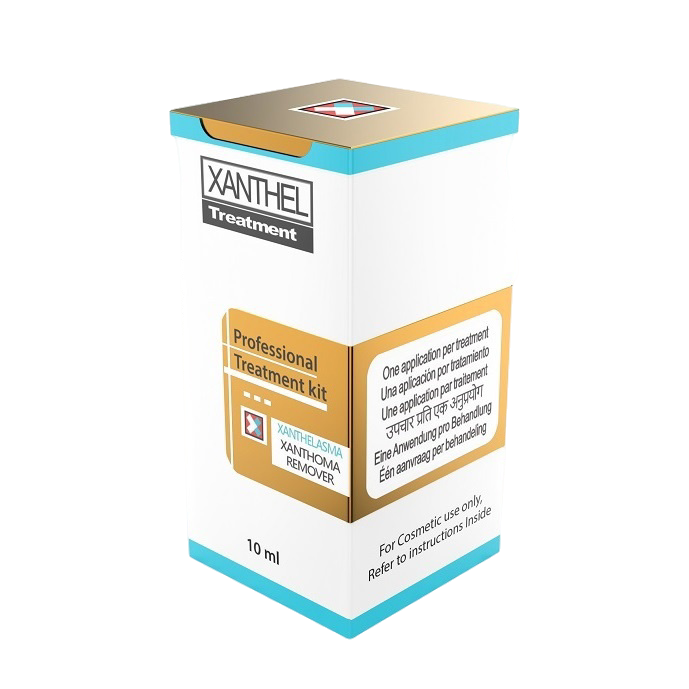
If you’d rather not go to a clinic, Xanthel® xanthelasma removal cream is made up for your skin and used at home, usually just once. You can see how real customers’ eyelids looked in our before and after photos. Results vary, but it’s a simple, private place to start.
Xanthelasma Cream: For Xanthomatous Patches On The Eyelids
Are xanthomas of the skin showing up on your eyelids? Xanthel® xanthelasma removal cream is a cosmetic gel designed to improve the look of xanthelasma alongside the cholesterol check your doctor recommends, so you can stop worrying about those patches every time you look in the mirror. Results vary from person to person.
Made For Your Skin
Each kit is formulated to order for your skin type and tone, rather than one formula for everyone, so it’s designed to work on your patches while staying gentle on the skin around your eyes.
Simple, Private And Quick
Apply it at home in a couple of minutes, usually just once. No clinic, no needles, and free tracked delivery worldwide.