How To Use Castor Oil For Xanthelasma Safely
Key Takeaways
How to use castor oil for xanthelasma: most people dab a little on the patches at night or use a warm castor oil pack, but there’s no evidence it removes them. If you try it, patch test first and keep it well away from the eye.
- Castor oil comes from the seeds of the Ricinus communis plant.
- It’s mostly ricinoleic acid, which moisturises and soothes the skin.
- It can’t dissolve the cholesterol deposits that sit under the skin.
- Drinking it is a strong laxative, not a cholesterol treatment.
- On the eyelids it can cause redness, itching, rashes or blurred vision.
- Xanthel® xanthelasma removal cream is a cosmetic gel made for your skin type, designed for eyelid patches.
How Do People Use Castor Oil For Xanthelasma?
Castor oil is one of the most shared home remedies for xanthelasma. You’ll find videos and forum posts suggesting a nightly dab on the patches, a warm castor oil pack on the eyelids, or a mix with baking soda. It’s cheap, natural and easy to buy, so it’s no surprise people give it a go.
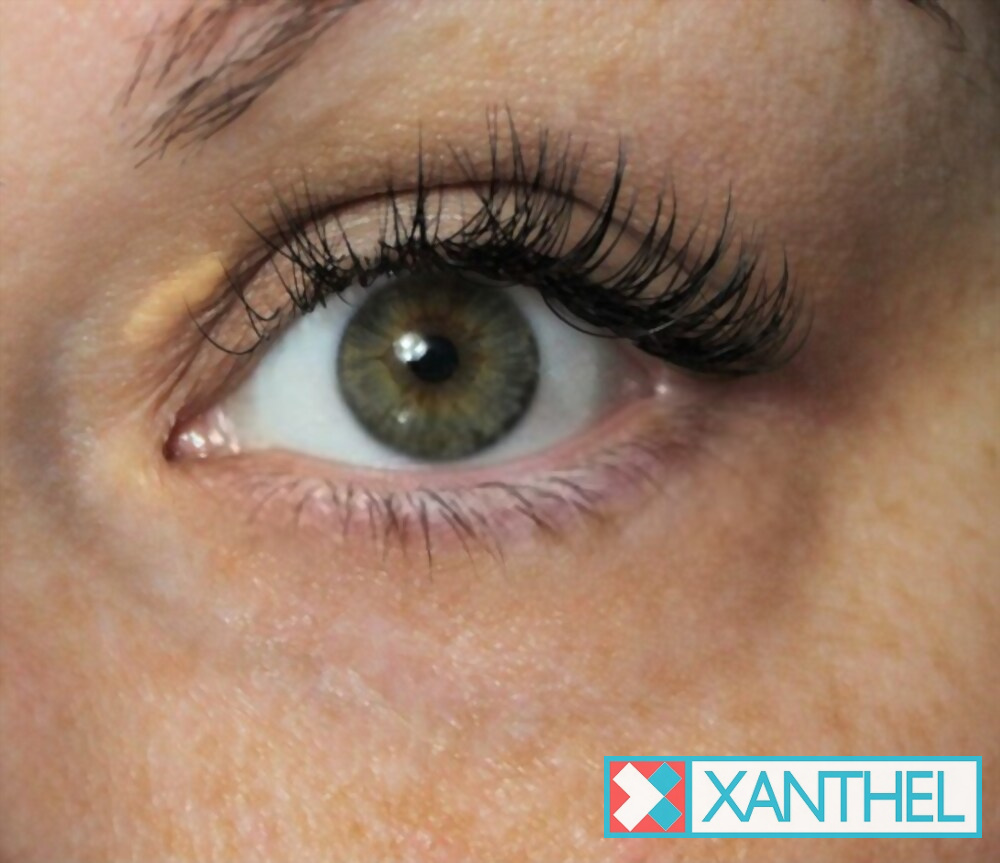
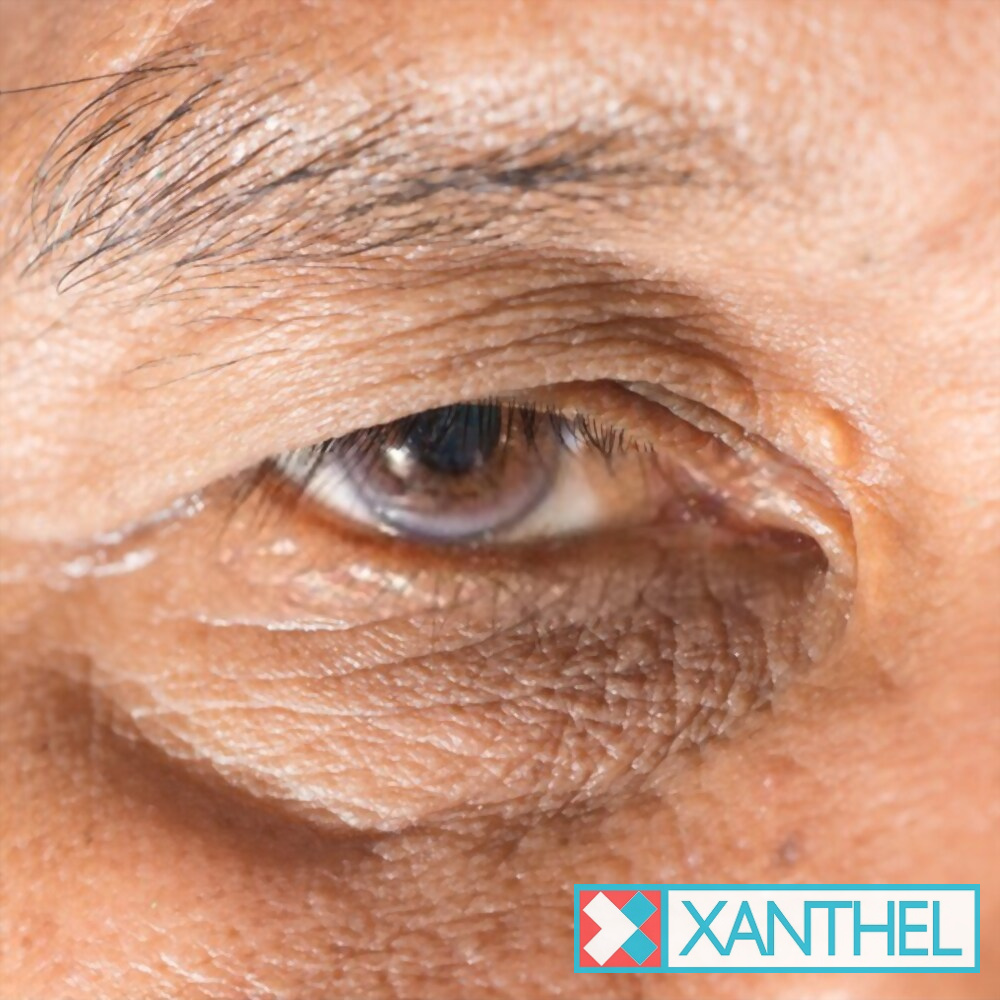
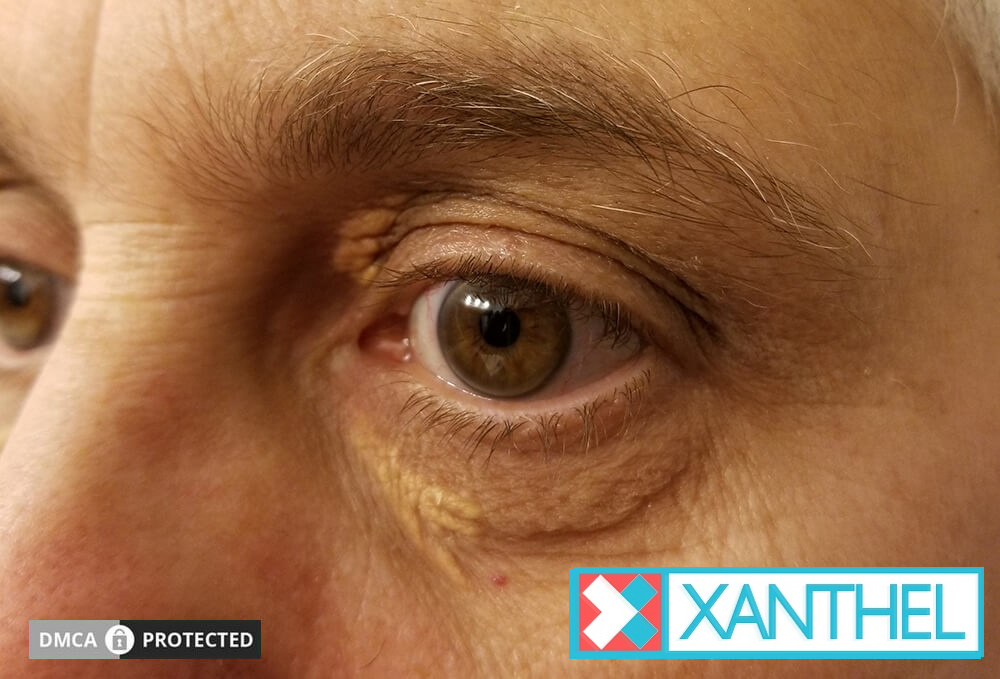
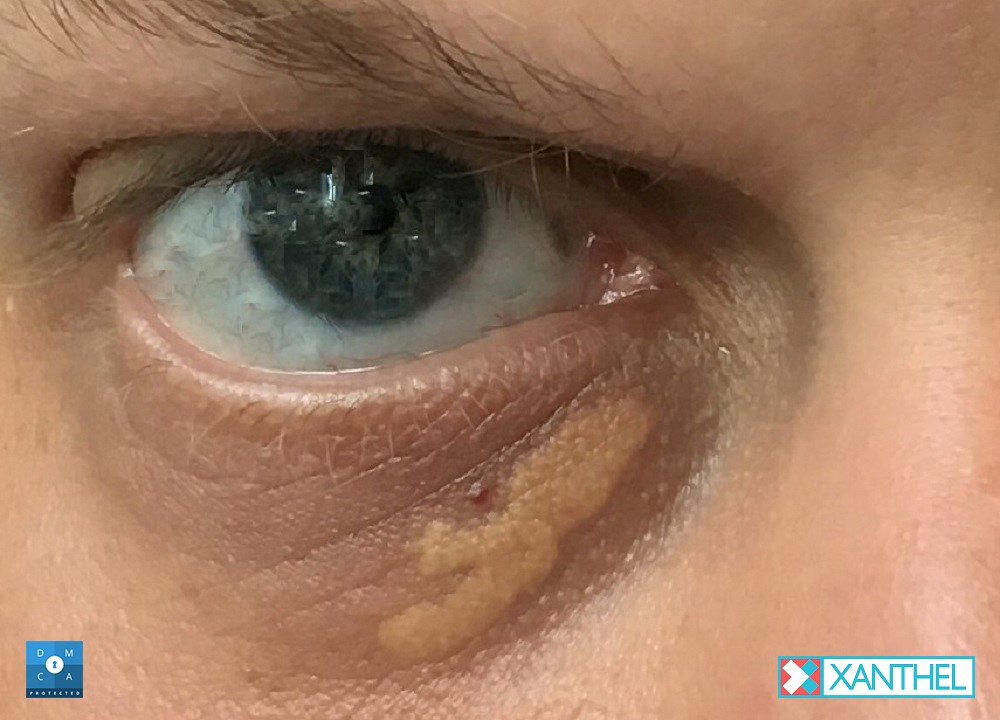
The honest answer is that there’s no good evidence it removes xanthelasma, however you use it. The patches are made of fat-filled cells under the skin, and an oil on the surface can’t break them down. Some people notice softer skin, which can make a patch look slightly different, but the deposit stays. If you’d like the full picture on whether it works, our page on castor oil and xanthelasma covers the evidence. This guide focuses on how people use it and how to stay safe if you try it.

Castor Oil On Eyelids: Myth Or Fact?
| The myth | The fact |
|---|---|
| It dissolves the deposits | There’s no evidence it breaks down cholesterol under the skin. |
| Natural means safe near the eyes | It can cause irritation, stinging and blurred vision if it gets in the eye. |
| Drinking it lowers cholesterol | It’s a strong laxative. Ask your doctor about cholesterol instead. |
| Overnight use fades patches | Patches rarely fade by themselves, and oils don’t change that. |
Want something made for eyelid patches? See xanthelasma treatment cream.
If You Still Want To Try Castor Oil On Your Eyelids
Start with a patch test: dab a little on your inner arm and wait 24 hours. If your skin is fine, use a tiny amount of pure, cold-pressed oil on a cotton bud, only on the patch, and keep your eye closed. Don’t use heat packs near the eyes, don’t mix in baking soda, and stop at the first sign of soreness.

What Is Castor Oil And What Can It Do?
Castor oil is pressed from the seeds of the castor plant, Ricinus communis, which grows mainly in Africa and India. Around nine-tenths of it is ricinoleic acid, a fatty acid with mild anti-inflammatory and moisturising effects. It’s been used for centuries, but many of the claims made for it come from tradition rather than research.
A Thick Moisturiser
It holds water in the skin well, so some people use it on dry elbows, heels or cuticles. It can feel heavy and may block pores on oily skin.
Soothing Dry, Irritated Skin
Its anti-inflammatory effect may calm mild dryness, but it can also cause irritation in sensitive skin.
Hair, Lashes And Brows
It’s sold for thicker hair and lashes. There’s little proof, though it can make hair look glossier.
A Traditional Laxative
Taken by mouth, it’s a strong laxative. That’s its main medical use, and it isn’t a cholesterol treatment.
Not A Way To Shift Xanthelasma
None of these effects reach the fat-filled cells under the skin. Xanthel® is designed for that job.

Castor Oil Side Effects Near The Eyes
Castor oil is generally gentle on the body, but the eyelid is thin, sensitive skin right next to the eye. That makes a difference. The most common problems people report after using it on their eyelids are:
- Redness and itching. Some people react to ricinoleic acid, especially with nightly use.
- Allergic rashes. Contact dermatitis can make the eyelids swollen, dry and flaky.
- Stinging and blurred vision. Oil that slips into the eye can sting and smear your vision for hours.
- Blocked glands. Thick oil can clog the tiny glands along the lash line, leading to styes.
- Burns from heat packs. Hot compresses held too long on the eyelid can scald the skin.
If you get any of these, stop, rinse gently with lukewarm water and speak to a pharmacist. If your eye stays painful, red or blurry, see a doctor promptly.
It’s also worth being wary of mixes shared online. Baking soda, essential oils, lemon juice or garlic added to castor oil make irritation and burns far more likely. Our guide to garlic for xanthelasma explains why raw garlic is a particular risk.
What To Use Instead Of Castor Oil
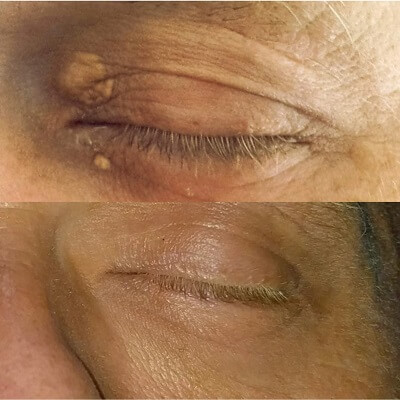
Castor oil won’t shift xanthelasma, but there are options that can. Clinics offer laser, freezing and surgery, which our xanthelasma removal and xanthelasma treatment guides compare side by side. If you’d rather stay at home, Xanthel® xanthelasma removal cream is a cosmetic gel designed to improve the look of xanthelasma, usually in one application. See real before and after photos. Results vary.
Castor Oil On Eyelids: Questions People Ask
Is Castor Oil Safe For Eyelids?
Usually, in small amounts on the skin, but it can cause redness, rashes or blurred vision if it gets in the eye. Always patch test first.
Should I Leave Castor Oil Overnight On My Eyelids?
It’s best not to. Oil can spread into the eye while you sleep and may clog the glands along the lash line.
Does A Castor Oil Pack Help Xanthelasma?
No. Warm packs don’t reach the deposits under the skin, and heat near the eye can scald the delicate eyelid skin.
How Long Do People Use Castor Oil Before Giving Up?
Many try it for weeks or months. If nothing has changed after a few weeks, it’s unlikely to, so it’s worth looking at other options.
Can I Use Castor Oil And Xanthel® Together?
Don’t put anything else on the area when using Xanthel®. Follow the kit instructions exactly, and stop using castor oil there first.