
Xanthelasma Palpebrarum: Yellow Patches On The Eyelids
Key Takeaways
Xanthelasma palpebrarum is the medical name for soft, yellowish patches of cholesterol on the eyelids. It’s the most common type of xanthoma, it isn’t harmful in itself, and it can be treated if it bothers you.
- Patches usually start at the inner corners of the upper eyelids, often on both eyes.
- They’re made of fat-filled cells sitting just under the skin.
- It’s more common in women and in people aged 30 to 60.
- About half of people with xanthelasma have raised cholesterol, so a blood test is worth having.
- It’s been linked to a higher risk of heart disease, even with normal cholesterol.
- Patches rarely fade on their own. See our xanthelasma treatment options or our xanthelasma removal cream.
Xanthelasma Palpebrarum: What It Means
Xanthelasma palpebrarum, often shortened to xanthelasma, describes flat or slightly raised yellow patches on the eyelids. The name comes from Greek and Latin: “xanthos” means yellow, “elasma” means a plate, and “palpebrarum” means of the eyelids. So, quite literally, yellow plates on the eyelids.
The patches aren’t painful or itchy and don’t affect your eyesight, but many people feel self-conscious about them because they’re so visible. That’s completely understandable, and it’s the main reason people look for ways to treat them. The good news is that, once you know what it is, there’s plenty you can do.
How Xanthelasma Palpebrarum Looks And Feels
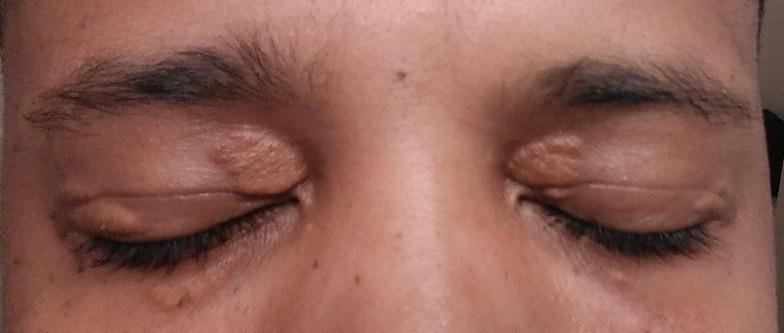
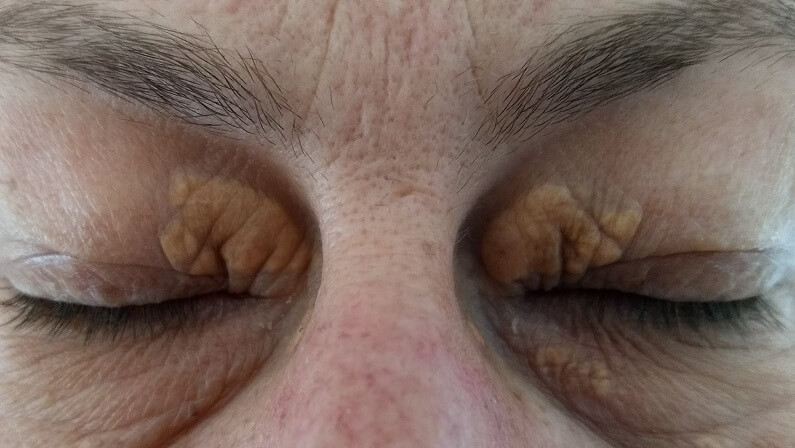
Xanthelasma can take a few forms. Some people have a single small spot; others have soft patches that join up and stretch along the lid. Most patches start at the inner corner of the upper eyelid, close to the nose, and they often appear on both eyes in a roughly mirror-image pattern. They can also form on the lower lids.
The patches are soft and velvety, with fairly clear edges, and range from pale lemon to orange-yellow. They grow slowly over months or years, and new patches can appear alongside the first. They don’t tend to shrink on their own. Doctors class them as plane xanthomas, which simply means flat fatty deposits in the skin. Our guide to what xanthelasma looks like has more detail and photos.
Xanthelasma often appears on its own, with no other deposits anywhere else on the body. When it does, it’s usually just a cosmetic concern. If you also have lumps or patches elsewhere, such as on your elbows, knees or tendons, tell your doctor, as those are more closely linked to blood fat levels and may need a fasting blood test.
Xanthelasma Palpebrarum Compared With Other Xanthomas
| Type | Where | Looks like | Blood fats |
|---|---|---|---|
| Xanthelasma | Eyelids, near the inner corner | Soft, flat, yellow patches | Normal in about half of people |
| Tuberous | Elbows, knees, buttocks | Firm, raised yellow nodules | Usually raised cholesterol |
| Tendinous | Achilles tendon, backs of hands | Smooth, firm lumps on tendons | Often inherited high cholesterol |
| Eruptive | Buttocks, thighs, arms | Small red-yellow bumps that appear suddenly | Very high triglycerides |
| Plane | Palm creases, neck, trunk | Flat yellow patches or lines | Linked to specific lipid disorders |
More on the differences: xanthoma and xanthelasma explained
Xanthelasma Palpebrarum In Plain English
Your blood carries fats, called lipids, around your body. The main ones are cholesterol and triglycerides. They travel in tiny packages called lipoproteins, including LDL (often called “bad” cholesterol) and HDL (“good” cholesterol).
Sometimes, fat from the blood leaks into the skin. Cells from your immune system, called macrophages, swallow it up and become swollen with fat. Under a microscope they look foamy, so they’re known as foam cells. When enough foam cells gather in the thin skin of the eyelids, they show through as a yellow patch. That’s xanthelasma palpebrarum.
Doctors put it in a wider group of conditions called xanthomas, which are all fatty deposits in the skin or tendons. Xanthelasma is by far the most common of them.
How Is Xanthelasma Palpebrarum Diagnosed?
A Look At Your Eyelids
Most doctors can recognise xanthelasma straight away from its colour, softness and position on the eyelids. They’ll also ask how long you’ve had it and whether it’s changed.
A Blood Test
Your doctor will usually suggest a fasting lipid test to check your cholesterol and triglycerides, and may check your blood sugar, thyroid and liver too. Picking up raised cholesterol early gives you the chance to protect your heart.
A Biopsy, Rarely
If a patch looks unusual, a small sample may be taken to look at under a microscope. This is rarely needed, because xanthelasma is so recognisable, but it can rule out other conditions that look similar.
Who Gets Xanthelasma Palpebrarum?
It’s more common in women and usually appears between 30 and 60, though younger people can get it too. People with raised cholesterol, diabetes or a family history of high cholesterol are more likely to develop it.